
You have seen the images of a lioness in golden grass and elephants under Kilimanjaro. You want to make those images yourself. As a Spanish speaker, you might worry that Kenya is only for English-speaking photographers. That is not true. But it does take planning.
This guide covers the real details of a wildlife photography safari in Kenya for Spanish speakers. We talk about seasons, parks, gear, vehicles, and the honest difference between a normal safari and a photography safari. We also share what things actually cost in 2026.
The Difference Between a Normal Safari and a Photography Safari
A standard safari is about seeing animals. A photography safari is about light, position, and patience. The vehicle matters. The timing matters. The guide matters most.
On a normal safari, you might stop for ten minutes at a lion sighting. On a photography safari, you might sit for an hour waiting for the lion to lift its head. You need a guide who understands composition and animal behavior, not just someone who can spot a leopard.
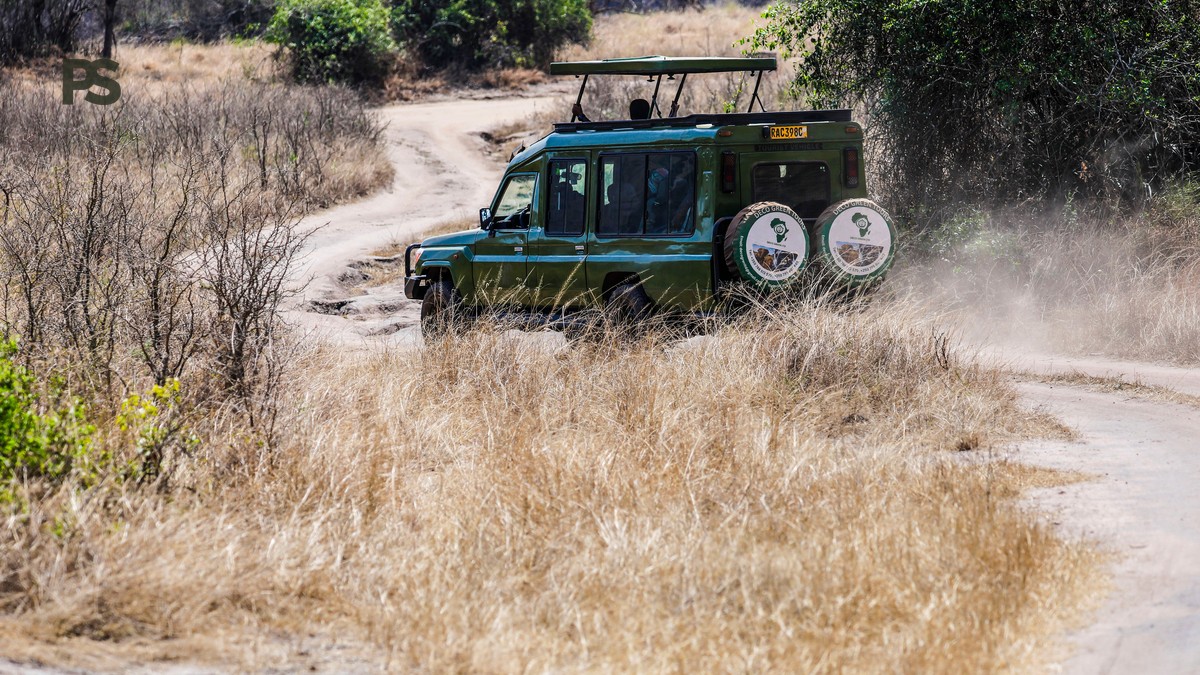
The vehicle is different too. You want a 4×4 with pop-up roofs and large windows. You want beanbags mounted on the window sills. You need a car where every seat has a clear view. A standard Land Cruiser with seven rows of seats is not ideal. You want a vehicle with three or four seats maximum.
Best Time for a Wildlife Photography Safari in Kenya
The long dry season runs from late June to October. This is the time of the Great Migration in the Masai Mara. River crossings happen almost daily in July and August. The grass is short, so animals are easier to see and photograph.
The short dry season runs from January to February. The light is clear. The skies are often blue with some clouds. Many photographers prefer this season because the crowds are smaller and the plains are quieter.
The wet seasons are March to May and November to December. These months are cheaper, but the grass is tall and many roads turn to mud. You can still get great images of birds and newborn animals. But your vehicle will get stuck.
For the best balance of action and light, plan for late June through early October. This is also the most expensive time, so book early.
Best Parks in Kenya for Wildlife Photography
Here is a table comparing the top parks for photographers. Use this to plan your route.
| Park or Conservancy | Best For | Non-Resident Fee (per adult per day) | Drive Time from Nairobi | Notes for Photographers |
|---|---|---|---|---|
| Masai Mara National Reserve | Great Migration, big cats | USD 100 (Jan-Jun), USD 200 (Jul-Dec) | 5-6 hours via Narok | County-run reserve, not KWS. High vehicle numbers in peak season. |
| Naboisho Conservancy | Low vehicle density, lions, cheetahs | USD 80-150 per person per night (bundled in lodge rates) | 5.5 hours to the Ololaimutiek Gate | Private land. Max 5 vehicles per sighting. Excellent for golden hour. |
| Mara North Conservancy | Wild, open plains, fewer tourists | USD 80-150 per person per night (bundled in lodge rates) | 6 hours to the Mara Rianda Gate | Great walking safaris. Good for wide-angle landscapes. |
| Amboseli National Park | Elephants, Kilimanjaro views | USD 90 | 4 hours via Emali | Morning light on Kilimanjaro is iconic. Dry lake bed offers stark scenes. |
| Lake Nakuru National Park | Rhinos, flamingos, birds | USD 90 | 2.5 hours via the Nairobi-Nakuru Highway | Compact park. Good for a short stop on a longer circuit. |
| Samburu National Reserve | Reticulated giraffes, Beisa oryx, dry-country specials | Indicative range: USD 60-100. Confirm at booking. | 5 hours via Isiolo | The Ewaso Ng’iro River attracts game, especially at dry times. |
| Aberdares National Park | Forest species, bongo, leopard | Indicative range: USD 60-90. Confirm at booking. | 3 hours via Nyeri | Misty forests. Use a faster lens, light is often low. |
For the Great Migration, the Mara is essential. For elephants with a mountain backdrop, go to Amboseli. For low vehicle numbers and a private feel, book a conservancy.
Photography Equipment: What to Pack
Your bag matters more than the camera body. Here is a practical list.
A full-frame camera with a fast autofocus system helps. But crop sensor cameras work fine. Bring two camera bodies, not one. Dust and lens changes are real problems.
For lenses, a 100-400mm or a 150-600mm zoom is the standard choice. A 70-200mm f/2.8 is great for portraits of animals and for the camp atmosphere. A 24-70mm is useful for landscapes and environmental shots.
A beanbag is essential. You will not want to use a tripod in a moving vehicle. A beanbag that rests on the window sill gives you a stable base. Bring a small tripod for any walking safaris or night sky shots.
Batteries and cards: bring at least three batteries per camera. Cold mornings and hot afternoons drain power. Bring several 128GB memory cards. You will shoot more than you expect.
A blower and a microfiber cloth are essential. The dust in the Mara gets into everything. Clean your sensor only in a clean environment, like your tent.
Photo Gear You Might Not Think Of
A hat with a brim keeps the sun off your face and the lens. A neutral density filter helps if you want to blur moving water or show motion in a herd. A rain cover for your camera is useful in the wet season.
Do not forget a headlamp. You will return to camp after dark. Your hands will be full. A headlamp is safer than a torch.
Day by Day Itinerary: A Sample Photography Week
This itinerary balances the Mara and a conservancy. It is a starting point, not a fixed plan.
Day 1: Arrive at Jomo Kenyatta International Airport in Nairobi. Drive to Amboseli or fly to the Mara. Fly if you can, it saves a full day.
Day 2: Full day in the Masai Mara National Reserve. Start at 6:15 AM, out of the gate by 6:30 AM. Watch the light on the savanna. Spend the middle of the day back at camp for editing and rest.
Day 3: Same, with a focus on the Mara River crossings. The guide will position you early near a known crossing point.
Day 4: Transfer to Naboisho Conservancy, a 1.5 hour drive from the Mara Sekenani Gate. Afternoon game drive on private land. Fewer vehicles, better light.
Day 5: Full day in Naboisho. You can leave the vehicle safely with a walking safari at dawn.
Day 6: Morning drive, then fly from the Mara’s Ol Kiombo Airstrip back to Nairobi. Depart in the evening.
This is a calm pace. You have time to wait for light and behavior.
Prices: What a Photography Safari Really Costs
Many Spanish travel agencies show a price “desde X euros” and hide the details. We will be clear.
A mid-range photography safari with a private vehicle and an English-speaking driver-guide costs roughly USD 350 to 550 per person per day. This includes park fees, full board accommodation, the 4×4 vehicle, and game drives. It does not include international flights or tips.
If you want a dedicated Spanish-speaking photographer-guide for the entire trip, add USD 150 to 250 per day. This is the honest trade-off. Most agencies use a local English-speaking driver-guide and a separate Spanish tour leader who does not necessarily know photography.
For a luxury experience, plan on USD 700 to 1,200 per person per day. This gets you premium camps like those in the Mara North Conservancy.
Group size matters. A private vehicle for two people costs more per person than a shared vehicle for six. For photography, you want the private vehicle. That cost is worth it.
Lodges and Camps: Where You Sleep Matters
For photographers, the camp location is not a detail. It is a decision.
In the Mara, Kicheche Bush Camp sits in the Mara North Conservancy. It is a classic photography camp. Tents face the plains. The morning light hits the valley directly.
In Naboisho, Basecamp Explorer has excellent guiding and low vehicle density. The camp is near a seasonal river. Zebras and wildebeest pass by the dining tent.
In Amboseli, Tortilis Camp has views of Kilimanjaro from the main deck. Elephants walk through the property. The camp’s position allows you to frame the mountain with acacia trees in the foreground.
In Samburu, Elephant Bedroom Camp is built along the Ewaso Ng’iro River. The riverside position gives you shade and constant birdlife.
All these camps are known among photographers. They are not the cheapest, but they are worth the premium.
The Plain Safaris Difference
We at Plain Safaris are based in Kenya. We are not a reseller. We operate the land cruisers, employ the guides, and confirm the camps.
Our standard photography vehicle is a custom Land Cruiser with three rows, but we remove the third row. This gives each photographer a window seat. We also add extra battery charging options.
We work with Spanish-speaking photographers who are also certified Kenya professional guides. They know the parks and the camera settings. You are not getting a translator. You are getting a second pair of eyes.
We give you the exact camp name and the exact price tier before you book. No “desde” games. A shared vehicle price and a private vehicle price are listed separately.
If you want a fully bilingual photographer-guide for all game drives, we will quote you that rate honestly. If you prefer to save money and use an English-speaking driver-guide with a Spanish-speaking camp host, we can do that too. The choice is yours.
Visas, Vaccines, and Practical Travel Info
You need a visa for Kenya. Most nationalities apply online for an eTA (electronic travel authorization). It costs about USD 34. Apply at least two weeks before travel.
The yellow fever vaccine is not mandatory for entry if you arrive from Spain or most of Latin America. But the Kenyan health authorities may ask for proof if you come from a yellow fever endemic country. Get the vaccine anyway, it protects you.
Malaria tablets are required. The parks are low altitude. Consult your doctor.
Currency is the Kenyan shilling (KES). Credit cards work in cities and big camps. Small shops and tips prefer cash. Carry USD in small bills as a backup.
Electricity is 240V with British style three-pin plugs. Your camera batteries will charge in camp, but bring adapters.
Is It Safe?
Yes. Kenya is safe for travelers who use reputable operators. The tourism industry is mature. The conservancies are secure. There is a visible ranger presence.
Use common sense. Do not walk at night outside camp. Follow your guide’s instructions in the bush. The biggest danger is a buffalo, not a person.
Practical Tips for a Wildlife Photography Safari in Kenya for Spanish Speakers
Many camps in the Mara and Amboseli have Spanish-speaking staff, especially in high season. But this is not guaranteed. Ask when you book.
The big travel insurance is useful but not a double check on every detail. Ask for a copy of your daily itinerary in Spanish before you pay.
Download offline maps and a translation app. Data coverage in the Mara is decent, but not reliable. A phrasebook for Swahili basics, like “asante” (thank you), goes a long way.
When to Book and How Long to Stay
Book at least six months ahead for the July to October season. The best camps fill up a year in advance.
For your first photography safari, stay at least seven nights. The first two days are for learning the rhythm of the bush. The photography gets better from day three onward. A week gives you enough chances for great light and animal behavior.
Que Sigues Conectado
You might want to learn more about the practical stuff before you commit. Read our preguntas frecuentes sobre el safari en Kenia para hispanohablantes to get clear on visas, packing, and tipping.
If you have traveled in Europe, you might also appreciate our photography safari guide for German-speaking travelers for a different perspective on planning.
And for a deeper look at what a private guide costs versus a shared vehicle, see our photography safari private guide and cost breakdown.
Plan Your Trip with Plain Safaris
You have the facts now. You know the seasons, the parks, the gear, and the honest prices. The next step is to plan your own trip.
At Plain Safaris, we design wildlife photography safaris in Kenya for Spanish speakers who want real images, not postcards. We name the camps. We name the prices. We put a photographer guide in your vehicle if you want one.
Tell us your dates and your style. We will send you a detailed itinerary with the actual camps and a per-person price in USD. No surprises.
Start planning your wildlife photography safari in Kenya today.