
If you’re asking what happens if wildlife blocks road on a Kenya safari, the short answer is simple. Stay inside the vehicle. A wildlife roadblock is a normal part of a Kenya game drive, not an emergency. It can happen ten minutes from camp on your first morning. A herd of elephants steps onto the track. A lioness lies across the dirt road. Every vehicle stops, and the guide quietly decides what to do next. This guide explains how that decision works, how long you may wait, and what it means for your schedule.
What Happens If Wildlife Blocks Road: What to Do
Stay inside the vehicle, keep quiet, and follow the guide’s instructions. The driver should stop at a safe distance, avoid honking or revving, and give the animal time to move. Never approach, feed, call to, or photograph wildlife with flash. If the animal becomes agitated, the guide may reverse slowly or choose another route.
On a real game drive, stop means exactly that. Do not stand up. Keep your voice low. In the Masai Mara, a lion may lie on the track near the Talek River. In Amboseli, an elephant family may cross near Ol Tukai. Both situations are ordinary. The animal controls the next move. Switch off your phone ringer. Do not bang on the vehicle. A quiet vehicle lets the animal resume feeding or walking. If it moves toward you, trust the guide’s response.
How Safari Guides Handle a Roadblock
The guide assesses the animal’s behaviour, position, and escape route before deciding whether to wait, reverse, or reroute. A professional driver avoids crowding wildlife and does not force a pass through bushes or a narrow gap. The guide may switch off the engine, maintain distance, and communicate with nearby vehicles when necessary.
Good Kenyan guides learn this through years on the same tracks. In Mara North Conservancy, drivers often reverse fifty metres to give a breeding herd room. In Naboisho Conservancy, guides may hold back because vehicle numbers are already low. The guide watches body language before touching the gear lever. A flicking tail, a turned head, or a low rumble changes the plan. Most guides will not honk. Honking can trigger a charge or a scatter. If traffic builds, the guide may use a radio to tell other vehicles to stay behind.
How Long Wildlife Roadblocks Usually Last
A wildlife roadblock may clear in a few minutes or last much longer when elephants, a herd, or predators are feeding, resting, or crossing. There is no guaranteed maximum waiting time because the animals control the schedule. Guides manage the delay by waiting safely, reversing, or rerouting rather than promising an exact clearance time.
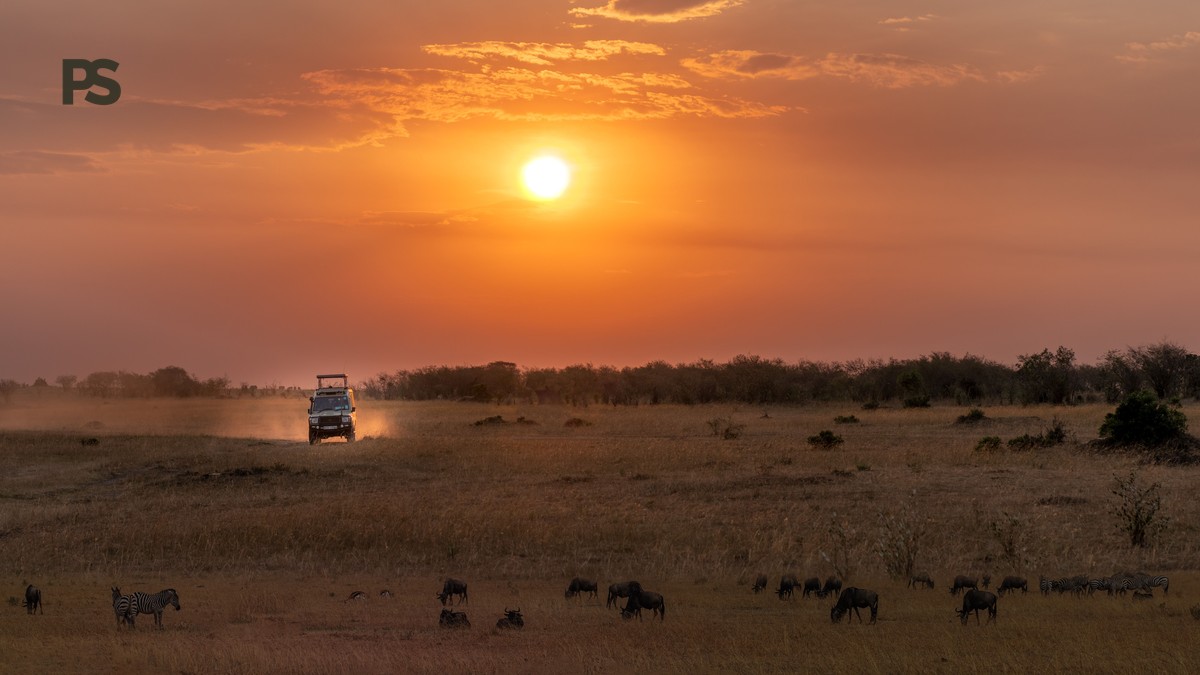
In practice, a single bull elephant may move off in ten or fifteen minutes. A breeding herd with calves can take forty-five minutes to cross a track one group at a time. A lion pride on a fresh kill might hold the road for well over an hour. In the Masai Mara National Reserve, a sighting near the Mara River can draw many vehicles, but the animals still decide. If you have a private vehicle, you can tell the guide you are happy to wait or ready to leave. In a shared vehicle, the guide usually balances the group but still respects the sighting.
Can the Safari Vehicle Drive Around the Animal?
A safari vehicle should drive around an animal only when the guide identifies a wide, permitted route that does not crowd or disturb it. Drivers should not squeeze past elephants, drive into vegetation, leave an authorised track, or force animals off the road simply to save time. Waiting is usually the safer option.
Kenya’s rules change by location. In Amboseli National Park and Tsavo East, off-road driving is not allowed. Guides stick to marked tracks. That means a blocked road often forces a turn back to a junction. In private conservancies like Mara Naboisho, off-road driving is allowed with restrictions, such as two or three vehicles per sighting. Even there, driving around a herd is rarely worth the risk. Squeezing through bushes can also damage tyres or hide a second animal. A professional guide chooses the route that keeps everyone calm, not the route that saves the most time.
What to Do When Elephants Block the Road
Remain seated and quiet while the driver keeps a generous buffer and watches the elephants’ body language. The vehicle should not approach, honk, rev, or attempt to split a herd. If an elephant displays agitation or moves toward the vehicle, the guide should reverse slowly and increase the distance before considering another route.
Elephants cause the longest and most misunderstood roadblocks. In Amboseli National Park, adult non-resident entry is USD 90 per day. A family can spend twenty minutes feeding beside the vehicle. In the Masai Mara National Reserve, entry is USD 100 per adult per day from January to June and USD 200 from July to December. The sighting may be worth more than the fee. Watch for warning signs. Ears held out, a shaking head, or a sudden turn toward the vehicle means the guide should back away. Never ask the guide to edge closer. A mother with a calf is unpredictable.
What Happens If Lions or Other Predators Block the Road?
The vehicle normally stops at a safe distance and remains still while the guide observes the animals. Passengers must stay inside and avoid sudden movements, shouting, flash photography, or attempts to attract attention. The guide decides whether to wait, reposition, or leave, especially if the predator moves toward the vehicle or nearby guests.
Lions are the most common predator roadblock in the Masai Mara and private conservancies. They do not see a closed safari vehicle as prey, but they may treat it as part of the landscape. If a lion walks alongside, sit still. Do not stick a hand or lens out the window. Cheetahs sometimes stand on vehicle bonnets, so guides may ask you to close the roof hatch. If you want fewer cars around predators, seeing wildlife without crowds is possible in Naboisho, Mara North, and other private conservancies.
How a Wildlife Roadblock Affects the Safari Schedule
A roadblock can shorten the next sighting, delay breakfast or lunch, or make a transfer take longer, but guides usually adjust the route and timing rather than rush the animals. Guests on tight transfer schedules should tell the operator in advance. A private vehicle offers more flexibility to wait or reroute than a shared vehicle.
Use this table to see how a roadblock fits into common Kenya routes. Transfer times assume normal dry-season conditions and no stops.
| Route | Distance one way | Typical drive time without a roadblock | Entry fee per adult per day | How a roadblock changes the plan |
|---|---|---|---|---|
| Nairobi to Masai Mara National Reserve | 230 km | 5 to 6 hours | USD 100 Jan-Jun, USD 200 Jul-Dec | A herd near Narok may add 45 min; game drive delays later can shorten lunch |
| Nairobi to Amboseli National Park | 240 km | 4 to 5 hours | USD 90 | Elephant family near Ol Tukai can add 30 to 60 min on the last leg |
| Naboisho Conservancy game drive loop | 5 to 15 km from camp | 1 to 3 hours | USD 80 to 150 per person per night, bundled | Fewer vehicles, so a lion roadblock may last longer but with less pressure |
| Nairobi to Lake Nakuru National Park | 160 km | 3 to 3.5 hours | USD 90 | Buffalo or rhino on the loop road can delay the afternoon game drive |
| Nairobi National Park main gate loop | 7 km from city, 20 to 30 km inside | Half day | USD 80 | Lion or rhino near the main gate can squeeze a morning safari before a flight |
A roadblock rarely ruins a safari, but it can tighten a transfer. If you have a flight from a Mara airstrip, book a private vehicle and allow extra time. For rough options, check how long a safari transfer should take. Tell your operator about any fixed flights, and do not expect the guide to chase animals off the road.
How to Photograph a Roadblock Safely
Photograph quietly from inside the vehicle, without flash or sudden movements. Keep cameras, arms, and lenses inside when the guide requests it, and use the roof hatch only after receiving permission. The aim is to record natural behaviour without changing it. A long lens and patience are safer than leaning close to wildlife.
A 200 to 400-millimetre lens is enough for most roadblocks. Set your camera before the animal arrives if you can. Use a fast shutter speed for elephants shaking their heads or lions yawning. Turn off the camera beep and the flash. A flash can startle a predator and change the moment you wanted to capture. Do not hold a phone outside an open window. If the guide says to lower the roof hatch, lower it. The best roadblock photos often come after the wait, when the herd starts to cross or the lion stands and stretches.
Why Guests Must Never Leave the Safari Vehicle
Leaving the vehicle removes the protective distance and can trigger a defensive or predatory response, even when an animal appears calm. Guests should never walk around a roadblock, stand beside the vehicle, or approach an injured animal. Only the professional guide decides when the vehicle can move and whether exiting is permitted.
Animals read a closed vehicle as one large shape. The moment a person steps onto the ground, that shape changes. An elephant that ignored the vehicle may charge a person on foot. A lion that accepts cars may see a standing human as potential prey. In Tsavo East, guides often stop for lions on the road, and no one opens a door for a better angle. Bathroom stops happen only at designated places, never beside a roadblock. Park rules require guests to stay in the vehicle except at marked sites.
The Plain Safaris Difference
Many safari operators treat a roadblock as a schedule problem. We plan it into the day. Our guides in Naboisho Conservancy and Mara North Conservancy know where elephant herds cross and where lion prides rest. They choose routes with fewer vehicles, so a predator sighting does not turn into a traffic jam. We leave camp early enough to absorb a forty-minute wait before breakfast. If you book a private vehicle, you choose whether to wait or reroute. First-time travellers get a clear briefing on roadblock etiquette before the first drive. That removes the worry. You focus on the sighting, not the clock.
Frequently Asked Questions
What do you do if an animal blocks the road on safari?
Stay inside the safari vehicle, remain quiet, and wait for the guide’s instructions. The driver will stop at a safe distance and may switch off the engine. Do not honk, rev, feed, call to, or approach the animal. The guide may reverse or reroute if the animal becomes unsettled.
How long can a wildlife roadblock last on safari?
It can last anywhere from a few minutes to well over an hour, depending on the species and its behaviour. Elephants, herds, and predators may remain on the track while feeding, resting, or crossing. A guide cannot guarantee a clearance time, so the vehicle may wait, reverse, or take another route.
Can safari vehicles drive around animals blocking the road?
Sometimes, but only if there is a safe and authorised route that gives the animals adequate space. Drivers should never force a pass, enter thick vegetation, or push wildlife off the road to keep to a schedule. Waiting or reversing is often the safest and least disruptive choice.
What happens if elephants block the safari road?
The driver keeps the vehicle at a safe distance and watches the herd’s body language. Passengers stay seated, quiet, and inside while the elephants choose when to move. If they appear agitated or approach, the guide backs away slowly rather than trying to pass or make them leave.
Will a wildlife roadblock make me miss my lodge transfer?
It can delay a transfer, especially when the roadblock involves elephants or a large herd. Guides generally allow extra time, communicate with the camp when possible, and choose a safe alternative route if one exists. Tell the operator about flights, check-in deadlines, or other fixed plans before the drive begins.
Plan Your Safari with Plain Safaris
If you are planning a first Kenya safari and want a guide who treats a wildlife roadblock as a sighting rather than an inconvenience, start a conversation with Plain Safaris. Tell us your route, travel dates, and whether you prefer a private vehicle. We will help you choose parks or conservancies with sensible drive times and realistic expectations. Use our contact page to ask questions or start planning.