
Most solo travel guides for Africa are written for someone who isn’t you. Search “solo male traveler safari safety” and you’ll mostly find advice about feeling empowered at a shared dinner table, or warnings about attention you probably won’t get. If you’re a man planning a first Kenya safari on your own, the real questions are more practical: will I get stuck paying double, will I be stuck with strangers all week, and is any of the safety talk actually about me.
Short answer: yes, it’s safe, yes, you’ll pay more, and no, it isn’t awkward once you know how the logistics actually work. Here’s the breakdown, with real numbers.
Solo Male Traveler Safari Safety: Is It Safe to Go on Safari Alone as a Man?
Kenya’s safari circuit is one of the more controlled travel environments you’ll find. You’re rarely unsupervised. A driver-guide meets you at the airstrip, camp staff walk you to your tent after dark, and every game drive follows the same radio-linked routes other vehicles use. The risk profile has less to do with being a man traveling alone and more to do with standard travel sense: watch your bags in Nairobi, don’t wander outside camp boundaries at night, and confirm your operator carries evacuation cover.
Wildlife is the one variable that doesn’t care about your travel style. Camps in the Mara and Samburu brief every solo guest the same way they brief couples: stay inside your tent after the staff walks you there, use the escort at night even if it feels unnecessary, and don’t assume a fence means anything. Elephants and hyenas walk through unfenced camps regularly. That part of the safety conversation applies equally whether you’re traveling with a partner or on your own.
The Single Supplement: What It Is and What It Costs
The single supplement is the extra fee camps charge when you occupy a room built for two. Most lodges price per person sharing, so a solo traveler either pays a supplement or gets matched with another guest of the same gender, which most Kenya operators no longer do as standard practice.
Supplements typically run 50 to 100 percent of the per-person shared rate, depending on the camp and season. On a $600-a-night tented camp, that can mean paying $900 to $1,200 a night alone instead of $600. Some camps waive it entirely during shoulder season (April, May, or November) to fill beds. Others waive it if you book six or more nights, since a longer stay is worth more to them than an empty second bed.
This is one of the biggest cost drivers on a solo itinerary, right alongside park fees. If you want the full picture on where your money goes, why a Kenya safari costs what it does breaks down the rest.
Where Solo Single Supplements Get Waived
| Camp / Operator | Region | Single Supplement Policy | Notes |
|---|---|---|---|
| Governors’ Camp collection | Maasai Mara | Often waived April-June and November | Ask about specific camp within the group |
| Elewana Collection properties | Mara, Samburu, Amboseli | Reduced supplement on 4+ night bookings | Varies by camp and season |
| Saruni Mara | Mara North Conservancy | Waived for solo guests in low season | Small camp, six rooms only |
| Angama Mara | Mara Triangle | Standard supplement, rarely waived | Premium pricing tier |
| Small mobile tented camps | Various conservancies | Negotiable, often no supplement under 4 guests total | Best value for solo travelers |
These figures are indicative and change by season and camp management. Always confirm the current policy directly with the property before booking. As a rule, smaller camps and mobile setups have more room to waive the fee than large lodges with fixed room inventory.
Best Parks and Conservancies for a Solo Trip
Private conservancies work well for solo travelers because vehicle numbers are capped and you’re less likely to end up boxed in at a sighting with a dozen other trucks. Naboisho and Mara North Conservancy both limit vehicles per sighting and run roughly $80 to $150 per person per night, bundled into the lodge rate rather than paid separately at a gate.
The Masai Mara National Reserve itself, run by Narok County Government rather than Kenya Wildlife Service, charges non-resident adults $100 a day from January through June and $200 a day from July through December, when the migration pushes demand up. Amboseli, Lake Nakuru, and Nairobi National Park, all KWS-managed, sit at $90, $90, and $80 per adult per day. Tsavo East and Tsavo West run $80. Chyulu Hills, a quieter option with fewer crowds, is $40.
| Park / Reserve | Managed By | Non-Resident Fee (Adult/Day) | Drive Time from Nairobi |
|---|---|---|---|
| Maasai Mara National Reserve | Narok County | $100 (Jan-Jun) / $200 (Jul-Dec) | 5-6 hrs by road, 45 min by air |
| Amboseli National Park | KWS | $90 | 4 hrs by road, 30-45 min by air |
| Lake Nakuru National Park | KWS | $90 | 2.5-3 hrs by road |
| Tsavo East / Tsavo West | KWS | $80 | 4-5 hrs by road |
| Nairobi National Park | KWS | $80 | 30-45 min from city center |
| Chyulu Hills National Park | KWS | $40 | 4-5 hrs by road, near Amboseli |
Practical Safety Logistics
Nairobi at night is where most first-time solo travelers get nervous, and it’s the one leg of the trip worth planning ahead. Don’t wander Nairobi’s downtown after dark on your own. Arrange airport-to-hotel transfer through your operator instead of hailing a random taxi at Jomo Kenyatta International. Most Plain Safaris itineraries route straight from the airport to a secure hotel in Karen or Westlands, both quieter and closer to the domestic airstrips you’ll use the next morning.
Once you’re in camp, security follows a set pattern. An armed or unarmed escort, depending on the property and region, walks you to and from your tent after dinner. You’ll get a whistle or radio for emergencies. Camps in Samburu and the Mara brief every guest, solo or not, to stay inside once escorted, since wildlife moves through camp boundaries after dark.
Get evacuation cover before you go. Flying Doctors Society of Africa (AMREF) membership covers emergency air evacuation from remote camps to Nairobi hospitals, and most reputable operators either include it or strongly recommend it. Confirm your travel insurance also covers medical treatment abroad, not just evacuation. It’s also worth reviewing what to pack in your safari medical kit before you fly out, since the nearest pharmacy might be a two-hour drive from camp.
Best Time of Year to Travel Solo
July through October is peak migration season in the Mara, which means higher park fees, higher room rates, and the least room for a waived single supplement. April, May, and November are shoulder season: lower rates, thinner crowds, and the best odds of a camp dropping or reducing the supplement to fill rooms. Rain is heavier in April and May, but game viewing holds up fine, and the Mara fee drops back to $100 a day from January through June.
Group Departures, Private Trips, or Mobile Camps
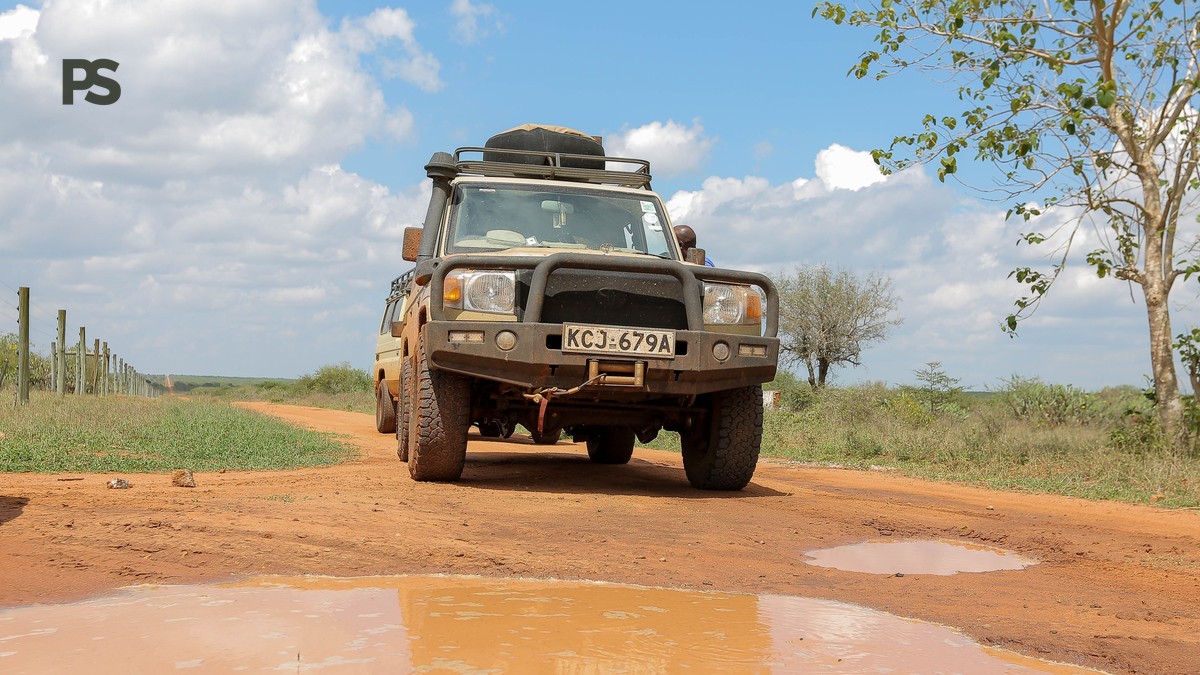
A group departure puts you with five to eight other travelers in one vehicle, splits costs, and removes the single supplement question for the vehicle, though not always for the room. A private trip costs more but means your own vehicle, your own pace, and no small talk you didn’t sign up for. A mobile tented camp sits between the two. Compare mobile tented camps versus permanent lodges if you’re deciding which fits your budget and how much company you actually want.
What a Solo Day on Safari Actually Looks Like
Wake-up call comes around 5:30 a.m. with coffee at your tent flap. You’re in the vehicle by 6:15 for the morning game drive, back at camp by 10 for a full breakfast. Midday is free time, usually a nap or reading by the mess tent. Afternoon drive runs from 4 to 6:30, then dinner, often at one long communal table where solo guests, couples, and families all eat together and swap stories from the day. Vehicle pairing on group trips is done by the guide, not left to chance, so you’re not sitting alone in a truck built for six unless you specifically book a private vehicle.
The Plain Safaris Difference
We build solo itineraries around camps that actually waive or reduce the supplement, not ones that quietly keep it on the invoice. We tell you upfront which weeks the Mara fee doubles, which conservancies keep vehicle counts low, and where the nearest river crossing sits relative to your camp, because that detail changes what your morning drive actually looks like. Every itinerary includes evacuation cover recommendations and a Nairobi transfer plan that skips the after-dark taxi guesswork entirely.
FAQ
Is it safe to go on safari alone as a man? Yes. Camps and vehicles run on set safety protocols regardless of who’s booked the room.
Do solo travelers pay more? Usually, through the single supplement, though many camps waive it in shoulder season or for longer stays.
Will I be paired with strangers in the vehicle? On group departures, yes, guides pair guests by vehicle capacity. Private vehicles avoid this entirely.
Is Nairobi safe at night? Stick to arranged transfers and hotel-recommended areas rather than walking or flagging taxis downtown.
Ready to plan a solo trip that fits your budget and your pace? Browse our solo safari packages or get in touch and we’ll build the itinerary around you.