
Most safari travelers search for the Masai Mara migration calving season after watching August river-crossing videos. They assume the newborn wildebeest appear on the same northern grass as the crocodiles. It does not work that way. The calving spectacle usually plays out in Tanzania, not Kenya. The months depend on which wildebeest you mean and where you actually sleep.
Is the Masai Mara migration calving season actually in Kenya?
No, not the headline calving. The main Great Migration calving season is usually January and February, and it runs across the southern Serengeti and Ndutu in Tanzania, not inside Kenya’s Masai Mara. The Mara does see more local calving from resident and Loita wildebeest during November and December after the short rains.
I have watched that distinction frustrate hundreds of travelers. They book a Masai Mara lodge for February because someone called it calving month. Then they find quiet plains and a few resident herds. The Mara is glorious in February, but it is not a nursery in the same way Ndutu is.
The useful exception is real. The Mara’s resident and Loita wildebeest give birth in scattered pockets around the Loita Hills, the Mara Triangle, Naboisho Conservancy, and Mara North Conservancy. Those births are less predictable. You should treat them as a bonus, not the main reason for the trip.
Where does the wildebeest calving actually happen?
The principal calving grounds are the short-grass plains of the southern Serengeti, especially the Ndutu area on the Serengeti-Ngorongoro border. Those plains offer minerals and short grass for pregnant females. The Masai Mara is generally occupied by the main migratory herds later, from roughly July through October.
I remember standing near Lake Ndutu one February morning. The grass was so short that I could see a cheetah turn its head half a kilometer away. A herd of wildebeest stretched to the horizon. Every few minutes, a female separated herself from the group and lay down.
That is the classic wildebeest calving experience. If your focus is the Masai Mara migration calving season, you need to know the animals are usually far to the south when the births happen.
Should you pick the calving season or the river-crossing season?
Choose January and February in the southern Serengeti if you want births and predator encounters. Choose roughly August and September in the Masai Mara if you want the highest likelihood of dense herds and dramatic Mara River crossings. Crossings cannot be guaranteed on a specific day. Give a crossing-focused itinerary at least four nights.
| What you want | Where to focus | Best months | Getting there | Realistic expectation |
|---|---|---|---|---|
| Mass calving and predators | Ndutu and the southern Serengeti | January to February | Fly Nairobi to Kilimanjaro or Seronera; from Seronera, allow an indicative 2 to 3 hour drive by park road to Ndutu | Hundreds of calves in one morning, with lion and cheetah action |
| Kenya-only route with scattered Mara calves | Mara Triangle, Naboisho, Mara North | November to December | Nairobi to Sekenani Gate via Narok is about 270 km and usually 5 to 6 hours; flights use Kichwa Tembo or Musiara airstrip | Lower vehicle pressure, but births are scattered and harder to predict |
| Crossing season with huge herds | Mara River and the Mara Triangle | August to September | Fly direct from Nairobi to Kichwa Tembo or Musiara; road from Nairobi takes about 5 to 6 hours | Dense herds and possible crossings, plus more vehicles at prime points |
The table shows the real trade-off. The Masai Mara migration months that appear in most brochures are July to October. The calving name belongs to the southern plains from January to February.
What wildlife and predator action can you see during the calving months?
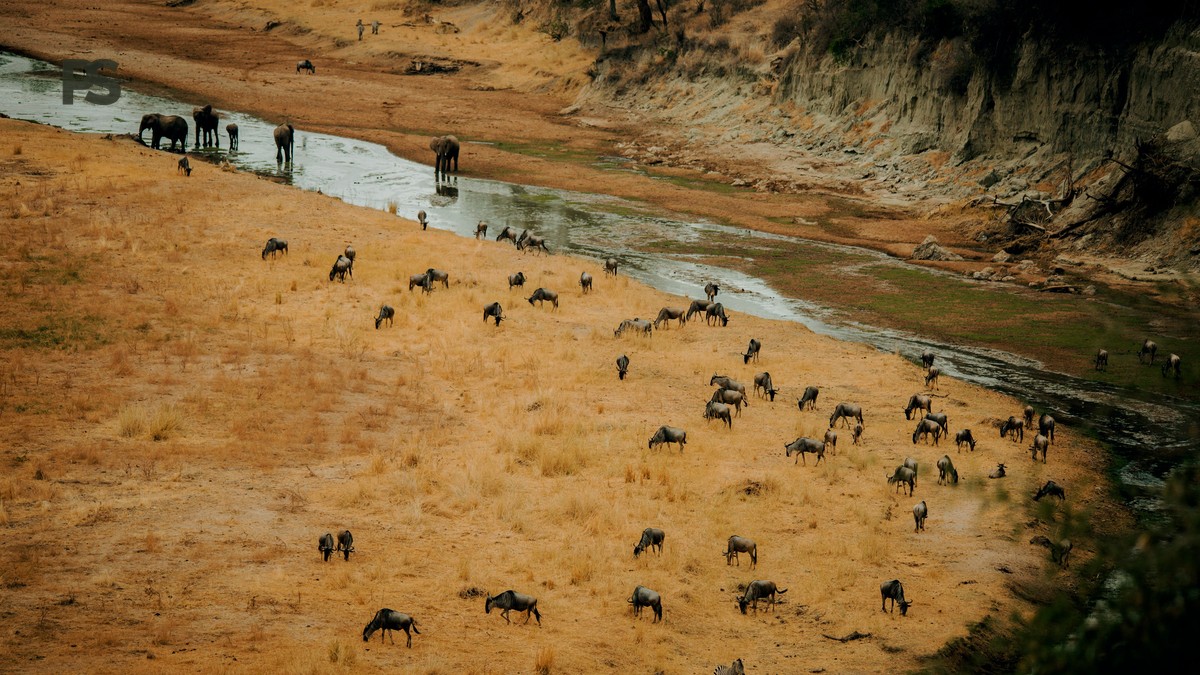
January and February offer exceptional chances to see newborn wildebeest and concentrated predator activity. Lions, cheetahs, hyenas, and occasionally leopards hunt the calving grounds. The attraction is the cycle of birth and pursuit, not river crossings.
The Great Migration predator sightings in Ndutu can be intense because the food supply is concentrated. A lion may wait at the edge of a female while she gives birth. Hyenas circle within minutes. Cheetahs use the short grass to chase calves that are only hours old.
It sounds raw. It can also be slow and quiet. You might watch one female for an hour before she delivers. Then everything moves fast. That is why your camp location matters more than your camera lens.
Is January or February a better safari month for the Great Migration?
Yes, January and February are strong months for a quieter predator-focused safari, especially in the southern Serengeti and Ndutu. They are not the best months for a classic Mara River crossing. But you get abundant young animals, active big cats, greener scenery, and fewer vehicles than the August peak.
February is generally the stronger calving month. Births peak on the southern Serengeti’s short-grass plains. January can be good too, especially for early births and fresh green grass. Weather plays a role. A wet start to the season can shift herds by a few kilometers from one day to the next.
The crowd level is medium. Ndutu is not empty. But it is usually less competitive than the Mara in September. Popular camps still fill early, so book like you are traveling in high season.
How do you plan a calving-season safari?
Base the itinerary near Ndutu if mass calving is your priority. Plan at least three nights. Four nights is better because daily game drives need to follow changing birth activity and predator movement.
My own answer to how many safari days you need for reliable wildlife sightings is simple: more than one, and four is safer for a calving trip. A camp located far from the birthing plains can cost you hours of driving each day. I would pick a simpler tented camp near the action over a luxury lodge two hours away.
If you want both calving and the Mara, combine Tanzania with Kenya. Do not treat a Masai Mara stay alone as a calving guarantee. A route that starts in Ndutu and then flies north to the Mara can work well. Allow a full travel day for the move. If this is your first African safari, reading what to expect on a first safari helps you pack for the dust and the early mornings.
For repeat Africa visitors, I like another option. Spend November in the Mara’s private conservancies looking for resident and Loita calves. Then add a separate northern loop. The green grass makes adding a walking and riding safari in Laikipia a natural follow-up after the main calving season.
What about costs, crowds, and accommodation trade-offs?
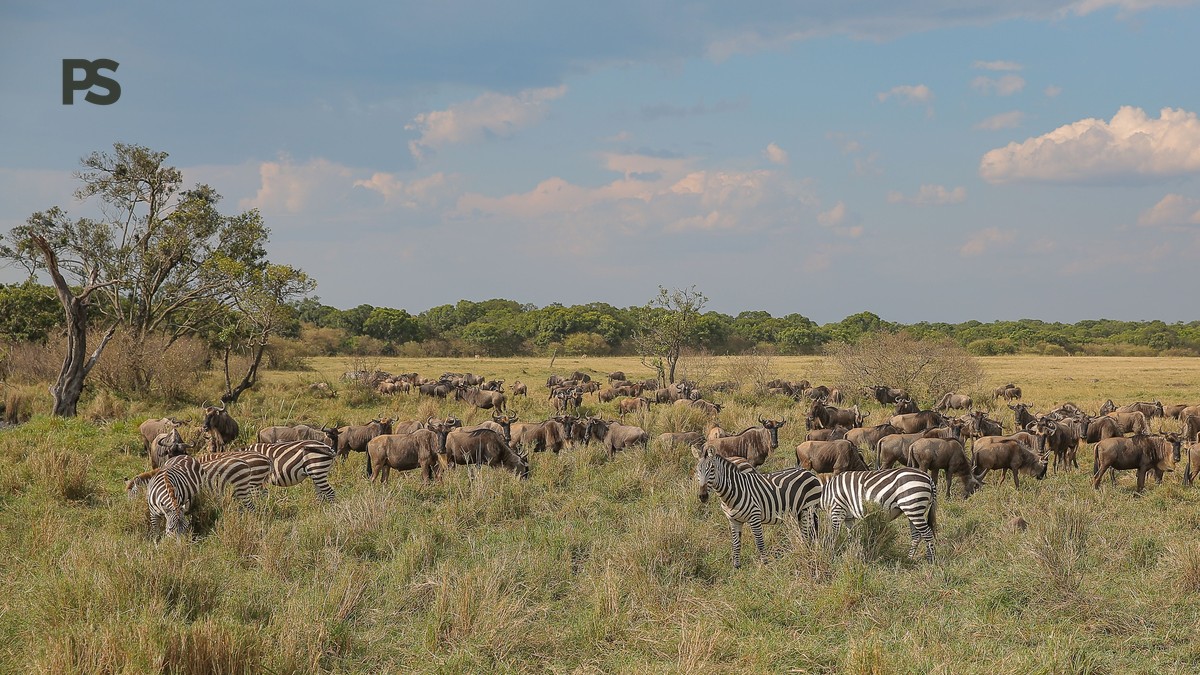
Calving season generally has lower visitor pressure than the Mara’s July-to-October peak. The best camps near Ndutu still command premium rates. Compare camp location, transfers, park fees, and vehicle policy before you compare room size.
Location is the number one cost trap. A cheaper camp 90 minutes from the birth grounds may force a three-hour round trip each day. That cuts into the hours when the light is soft and the cats are active. Paying more for proximity often saves money in wasted drive time.
The Mara side has its own fee logic. Masai Mara Reserve entrance is administered by Narok County, not the national park agency. A private conservancy such as Naboisho or Mara North bundles its nightly fee into your lodge rate. That is why a conservancy stay can feel expensive at first but gives you quieter game drives and more flexibility after dark.
The Plain Safaris Difference
This is where Plain Safaris earns its keep. We work on both sides of the Kenya-Tanzania border, so we can tell you honestly where a January herd is likely to be. We do not sell a Masai Mara camp as a calving base if the real births are 400 km south.
Our small-group safaris keep the number of vehicles low at a kill or a fresh calf. That matters when predators are nervous. On small-group safaris, your guide can wait with one animal instead of competing with ten cars for space.
Plain Safaris builds routes for returning Africa visitors who want fewer vehicles, not just famous names. Tell us whether you want mass births in Ndutu, scattered local calving in the Mara, or a combined itinerary with flights between the two. We will match a camp to current grass conditions and actual transfer times. That personal planning is the part you do not get from a generic migration package.
And the verdict?
Here is the plain answer.
Choose the southern Serengeti and Ndutu in February if mass calving and predator action matter most. Choose the Masai Mara in November or early December if you want a Kenya-only trip, quieter mornings, and the patience to find scattered resident and Loita calves. Choose August or September in the Mara if you really want river crossings.
If you are not sure which side of the border fits your dates, tell Plain Safaris what you hope to see. We will help you pick the route, the camp, and the right number of nights. Start planning your calving-season safari through our contact page when you are ready to compare real options.