
The next Ramadan is expected to run from around February 8 to March 9, 2027. Exact dates depend on the moon sighting. That window falls in Kenya’s dry season, which is good news for wildlife viewing. It is also manageable for fasting travelers, if you plan the day around it. This guide covers safari during Ramadan travel tips for Kenya. We look at what an actual Ramadan safari day looks like. We cover which regions handle the heat and fasting hours best, and how to talk to your camp before you land. No generic checklist, just the details we would tell a friend booking their first trip.
Safari During Ramadan Travel Tips: Can You Skip Fasting?
Islam recognizes travel as a valid reason to defer fasting. Most scholars cite a distance rule, often around 78 km (48 miles) from home. Past that distance, a traveler may postpone missed fasts and make them up later. A multi-day safari circuit easily clears that distance. Still, this is a personal decision. Many Muslim travelers choose to keep fasting anyway, especially during the cooler morning game drives. If you’re unsure, talk to your own imam before you travel. A blog post should not settle this for you. Either way, your guide and camp can build the day around your choice, not the other way around.
Choosing Cooler, High-Altitude Parks: Laikipia vs the Mara
Altitude matters more than most first-time travelers expect. The Maasai Mara sits around 1,500 meters. By midday in the dry season, temperatures often reach 28 to 30°C on the valley floor. Laikipia, north of Mount Kenya, sits higher, around 1,800 to 2,000 meters at camps like Sosian and Ol Malo. Mornings there can be genuinely chilly, closer to 12°C at sunrise. That gap makes a real difference on a fasting stomach.
If heat is your main worry, we’d steer first-time fasting travelers toward cooler, higher-altitude regions like Laikipia over the hotter Mara lowlands. Camps like Sirikoi, inside the Lewa Wildlife Conservancy, take advantage of elevation to keep afternoons bearable. So does Angama Mara, perched on the Oloololo Escarpment at roughly 2,100 meters above sea level. That puts it several hundred meters above the Mara Triangle floor below. The wildlife trade-off is small. Lewa has strong rhino numbers. Laikipia’s conservancies also run at low vehicle density, so you’re not fasting through crowded sundowner spots either.
A Real Ramadan Game Drive Day, Hour by Hour
Here’s roughly how a Ramadan day runs at most Kenya camps we work with. Timing shifts a little by season and location.
- 4:30 am – Suhoor served quietly in camp, before Fajr, which falls around 5:00 to 5:15 am in February and March.
- 5:45 am – Dawn game drive departs. This is the coolest, most active wildlife window of the day, and the easiest hours to fast through.
- 9:00 am – Back at camp for rest, shade, and a nap if you need one. Most camps skip the midday activity block entirely during Ramadan.
- 4:00 pm – Afternoon drive departs, once the sun has dropped a little.
- 6:30 to 6:45 pm – Maghrib and Iftar, often timed to a sundowner stop with dates, water, and a light snack before the fuller meal back at camp.
Good guides plan the return route so you’re not still bouncing over rutted track when the sun sets. Some camps go a step further. They time a sundowner stop to double as your Iftar spot. You park somewhere quiet with a proper view, instead of rushing back to the dining tent.
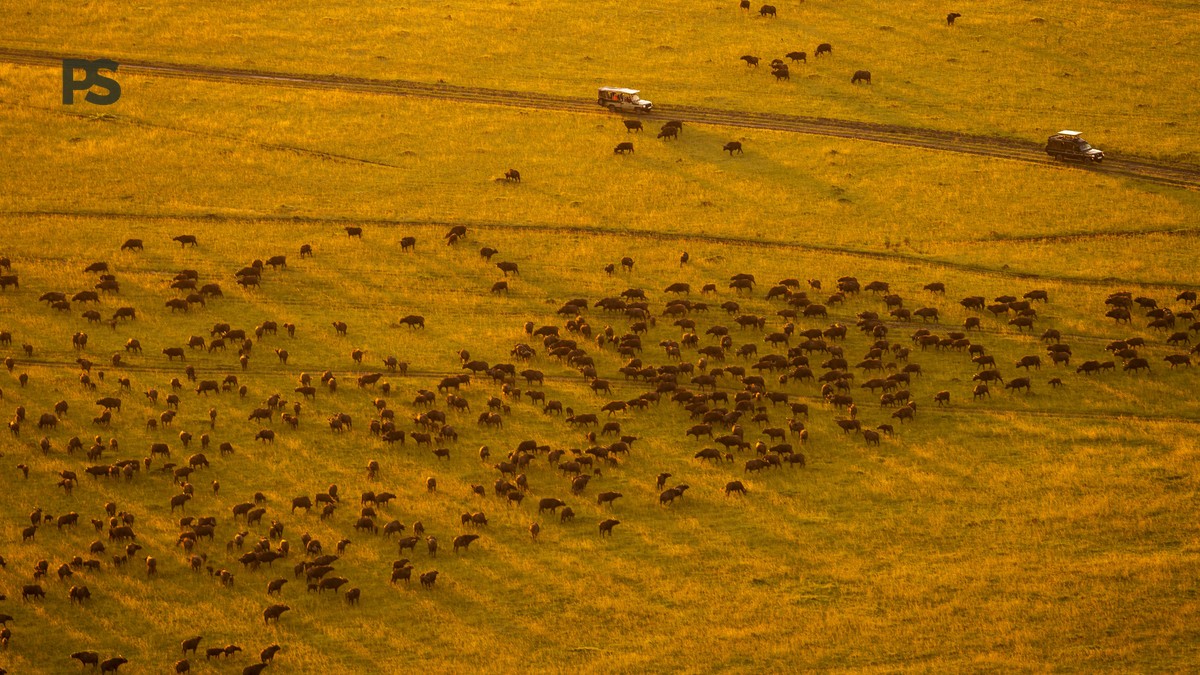
Staying Hydrated and Nourished While Fasting in Safari Heat
Kenya sits near the equator, so daylight hours stay close to 12 hours year-round. That keeps the fasting window shorter and more predictable than at higher latitudes during a home country’s summer. That’s a real advantage. Still, dust, altitude changes, and open-vehicle drives dehydrate you faster than a normal day at home.
At Suhoor, camps that know their guests are fasting will offer slow-release foods, oats, dates, and electrolyte-friendly drinks, rather than just coffee and toast. At Iftar, rehydrate gradually rather than all at once. Carry a refillable water bottle on every drive, even the short ones. Tell your guide if you start to feel lightheaded. Most guides in Laikipia and the Mara have driven fasting guests before, and know to pace the day accordingly.
Prayer Logistics in the Bush
Prayer on safari is more straightforward than people expect. A folding travel prayer mat packs easily into a duffel. Offline Qibla compass apps work fine once you’ve cached the direction with a signal at camp, so no connectivity is needed out on the drive. Guides are generally happy to pull over at a quiet, shaded spot for a few minutes between sightings. Most camps also have a private tent corner or a quiet stretch of riverbank set aside, if you ask in advance. It’s a small logistical need, and one experienced Kenya guides handle without making a fuss of it.
Friday Jumuah prayers are harder to arrange in the bush, since a congregation and khutbah are part of it. If Jumuah matters to you, mention it when you book. Some camps near towns like Nanyuki or Narok can help you reach a mosque. Others connect you with fellow Muslim guests and staff for a small group prayer.
Halal Meals: Talk to Your Camp Before You Arrive
Inland safari camps in the Mara, Laikipia, and Amboseli can usually arrange halal meals. They need notice, ideally when you book rather than on arrival. Most kitchens will confirm meat sourcing and adjust the menu without issue, since chefs are used to dietary requests, from allergies to vegan guests. What they can’t do well is improvise on day one. Mention it clearly at booking, and confirm again a week before you travel.

Coast or Bush? Zanzibar and Lamu vs Maasai Mara and Laikipia
Some travelers ask whether a Ramadan trip is better spent on Kenya’s coast. The Muslim community there is long-established, and halal food is the default, rather than something you have to ask for on a game drive. Lamu Old Town and Zanzibar’s Stone Town both fit that description well. Both have mosques, halal restaurants, and a slower daily rhythm built around prayer times. The trade-off is that you lose the wildlife entirely.
Here’s how the main options compare:
| Region | Altitude | Distance/time from Nairobi | Non-resident park fee | Halal food access |
|---|---|---|---|---|
| Maasai Mara National Reserve | ~1,500 m | ~270 km, 5-6 hrs by road, or 45 min flight | USD 100/adult/day (Jan-Jun) | Advance notice needed |
| Laikipia (Lewa, Sosian, Ol Malo) | ~1,800-2,000 m | ~230 km, 4-5 hrs by road, or 40 min flight | Conservancy fee approx. USD 80-150/person/night | Advance notice needed |
| Amboseli National Park | ~1,150 m | ~240 km, 4 hrs by road | USD 90/adult/day | Advance notice needed |
| Lamu Old Town | Sea level | Flight only, ~1 hr from Nairobi | No park fee | Widely available |
| Zanzibar (Stone Town) | Sea level | Flight only, ~1 hr 45 min to 2 hrs direct | No park fee | Widely available |
If this is your first Kenya trip and you want both, a common pattern works well. Spend three or four nights in Laikipia or the Mara. Follow that with two nights on the coast to unwind. It costs a bit more in flights. But it lets you fast through wildlife mornings, then break the fast somewhere with a call to prayer audible from your room.
The Plain Safaris Difference
We plan Ramadan trips the same way we’d plan them for our own family, around the actual clock, not a generic itinerary template. We build drive times around Suhoor and Iftar before we ever confirm a camp. We check with each lodge that halal meals are genuinely arranged, rather than assumed. We steer first-time travelers toward cooler regions like Laikipia when heat is a real concern. If you’re still working through the first-time Kenya safari planning basics, we’ll walk you through those too. That means budget, packing, and how many days you actually need, before we get into the Ramadan-specific details.
Plan Your Ramadan Safari With Us
If you’re weighing a Kenya safari during Ramadan and want a schedule that actually fits your fasting hours, we’re happy to help you build it. Get in touch with Plain Safaris and we’ll put together an itinerary around Suhoor, Iftar, and the wildlife you came to see.