
“Can safari vehicles use child seats?” That question should have a clear answer before you book anything. The honest answer is yes for some journeys and no for others. A transfer car with a three-point belt can often take a child seat. An open-sided game-drive vehicle may not have a safe place to anchor one. This post is built around five checks. Use them before you pay for a safari.
Can Safari Vehicles Use Child Seats?
Sometimes, but not reliably. A normal transfer vehicle usually has suitable three-point belts and may accept an infant or booster seat. A game-drive Land Cruiser often has bench seating, lap belts, or no rear restraints. ISOFIX points are rare. Confirm the exact vehicle and seat-fitting method with the operator before paying.
On a typical trip, the same family travels in two very different vehicles. The airport pickup is often a closed 4×4. The morning game drive is usually an open-sided safari Land Cruiser. The road transfer offers a normal car seat installation. The game-drive vehicle is a viewing platform, not a family car. Some families bring a lightweight harness or booster for short drives, but a rear-facing seat with a heavy base rarely fits. A family with young kids should not solve this problem at the airport. You need the answer before you leave Nairobi.
Child Seats in Kenya Safari Vehicles Versus Transfer Cars
Use a child seat for road transfers such as airport pickups and long journeys between Nairobi, Amboseli, and the Mara. During an off-road game drive, the vehicle may have side benches and limited restraints. A conventional rear-facing or bulky forward-facing seat may not fit safely. These are different transport situations and require separate arrangements.
I separate my planning into two lists. Road legs include airport pickups, inter-park transfers, and day trips to airstrips. Game-drive legs are the actual safari hours. When I drive families between Nairobi and Amboseli, the road is mixed tarmac and murram. That is a long stretch. A child seat keeps a young passenger properly positioned for four or five hours. The same seat often will not fit across a bench row inside the reserve. Plan the transfer seat first, then ask the camp about game-drive options.
| Transfer or game drive | Route | Approx distance | Typical drive time | Child seat fit |
|---|---|---|---|---|
| Nairobi to Amboseli | Nairobi to Amboseli National Park | 230 km | 4 to 5 hours | Usually fits in a closed 4×4 with a three-point belt |
| Nairobi to Lake Nakuru | Nairobi to Lake Nakuru National Park | 160 km | 3 to 3.5 hours | Fits in most transfer cars |
| Nairobi to Masai Mara | Nairobi to Masai Mara National Reserve via Narok | 260 km | 5 to 6 hours | Confirm before booking; fit depends on vehicle |
| Masai Mara game drive | Mara Triangle or Sekenani area loops | Not fixed | 2 to 4 hours per drive | Bench seats and lap belts; bulky seats often do not fit |
Child seat hire is usually separate from the camp rate. On transfer legs, a reported range is $8 to $12 per day for an infant or toddler seat. Some camps provide a booster at no charge. Others do not have any seat. Ask about delivery and fitting. A seat that arrives without a three-point belt nearby is not useful.
Safari Vehicle Seat Belts and Safari Land Cruiser Fit
Closed-back private 4x4s offer the best chance of fitting a child seat because they are more likely to have forward-facing seats and three-point belts. Shared and open-sided safari vehicles commonly use bench rows with lap belts, while ISOFIX or LATCH points are uncommon. Never assume a seat will fit from photographs alone.
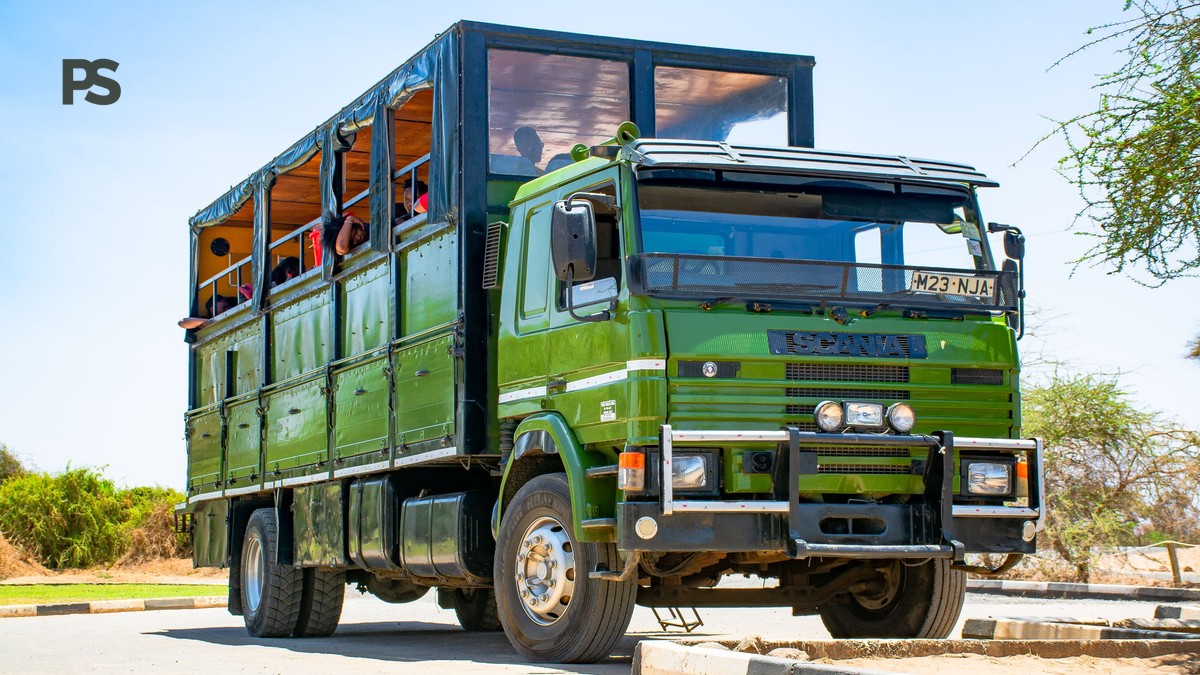
The open-sided Safari Land Cruiser is built for visibility. Its rear rows are usually benches with armrests in the way. Many builds have lap belts only. Some have no rear belts at all. ISOFIX is rare on vehicles built for East African tours. LATCH points are also unusual. A seat that relies on built-in anchors may be impossible to install.
A belt-installed seat can work, but only if the belt is a three-point belt and the base sits flat. A lap belt can secure a booster only if the booster also has a shoulder belt guide. On a bench with no shoulder belt, a booster is not safe. A five-point harness seat may be used with a lap belt only in rare cases, but the base must sit flat. That is uncommon on a Land Cruiser bench.
If the camp offers a private vehicle, ask which model. A closed Toyota Land Cruiser Prado has more normal rear seats. A Land Rover Defender often has three-point belts in the back. A dedicated safari Land Cruiser does not guarantee a safe fitting point just because it has a roof.

Safari Age Restrictions and Private Safari Vehicle Rules
There is no single Kenya-wide minimum age for game drives; camps and conservancies set their own rules. Some family-friendly properties accept younger children in private vehicles. Other safari policies restrict children under about six from standard drives or require exclusive use. Confirm daytime, night-drive, and walking-safari rules separately.
Before you book, ask three questions. What is the minimum age for shared drives? What is the minimum age for a private vehicle? Are night drives and walking safaris allowed for this age? The answer changes depending on the camp.
Conservancy stays are a good middle ground. A camp in Mara North Conservancy may accept a three-year-old in a private vehicle. The same camp might say no to a shared vehicle. Naboisho Conservancy has similar policies. In the main Masai Mara Reserve, open shared vehicles often set a minimum age around six. Always ask before you reserve.
Private safari vehicle rules matter because age limits are easier to manage when you have the vehicle to yourself. A private vehicle costs more. You can expect an exclusive-use supplement of $100 to $250 per day on top of standard rates in many camps. Some camps package it. Conservancy nightly rates at places like Naboisho and Mara North usually run $80 to $150 per person and include the conservancy fee. Vehicle numbers are capped, which helps your family get a quiet view. See how conservancies limit vehicle numbers to compare the main reserve with private areas.
For Amboseli, the transfer route and lodge choice change the daily pace. Before you pick a camp, spend time comparing Amboseli safari lodge prices so the road transfer and child seat setup match your budget.
How to Arrange a Kenya Safari Child Seat Before Booking
Send the operator your child’s age, height, weight, and seat model before booking. Then request written confirmation of the vehicle, belt type, anchor points, and fitting method. Ask whether the seat is supplied, hired, or included. A reported Kenya hire range is about $8 to $12 per day for an infant or toddler seat on transfer legs.
Here is the script I give parents. Copy it into an email and send it before you pay a deposit.
5 Safety Checks Before You Book
- Confirm the exact vehicle for every leg. Ask whether the inbound transfer is a closed Land Cruiser, a van, or an open vehicle. Ask which row the child will use.
- Check belt type and anchor points. Three-point belts are good. Lap belts are limited. ISOFIX is rare. Ask for a photo or a written description.
- Provide the child’s height, weight, and seat dimensions. A five-point harness seat with a wide base may not fit across a bench. A compact seat may work.
- Ask about seat supply and hire costs. Some camps lend a booster. Others arrange a hire seat for $8 to $12 per day for transfer legs.
- Get written confirmation before you pay. A verbal promise at booking is not enough. Ask for an email or a booking note.
When you search for a car seat for safari transfer, generic advice rarely mentions bench seats or lap belts. Keep this list handy. Your Kenya safari child seat plan should be in writing, not just a hope.
The Plain Safaris Difference
Plain Safaris is a small team of drivers and trip planners. We sit behind the wheel on the same roads you will travel. We also travel with children, so we ask the right questions. Before we confirm a lodge, we confirm the vehicle, the seat belts, and the anchor points. We match family-friendly camps to your child’s age and energy level.
We use private vehicles for transfer legs when that is the safest choice. We can also arrange a private safari vehicle inside a conservancy, so your family controls the pace. If you have a longer window, start by planning a 14-day Kenya safari itinerary to combine Amboseli, the Mara, and a quiet conservancy without back-to-back long drives. That is how the trip stays comfortable for the whole family.
Frequently Asked Questions
Do safari vehicles have child safety seats?
Many standard game-drive vehicles do not have a conventional child safety seat. Some have only lap belts or no rear restraints. A transfer vehicle may have a hired or supplied seat. Ask for the equipment separately for each journey leg.
Can you take a baby on a Kenya safari?
A baby may be accepted by some camps and operators. That does not mean a standard game-drive vehicle can safely install an infant seat. Arrange a suitable seat for road transfers. Confirm the camp’s minimum age, vehicle, drive length, and supervision policy before booking.
Are there seat belts in safari vehicles?
Seatbelts vary by vehicle and seating position. Closed-back 4x4s may have three-point belts. Open-sided vehicles and bench-style Land Cruisers often use lap belts or provide limited rear restraint. Request the belt configuration for your specific vehicle instead of relying on a general safari description.
What age can children go on safari?
The minimum age depends on the camp, conservancy, activity, and vehicle. Some properties set a minimum around six for shared or open-vehicle drives. Younger children may be allowed in a private vehicle. Night drives and walking safaris often have stricter rules.
Do I need to bring my own car seat on safari?
Bring or pre-book your own seat for road transfers if the operator cannot confirm a suitable one. For game drives, first check whether the vehicle has compatible belts and enough space. A bulky seat may not fit a bench. Written confirmation is safer than discovering a problem on arrival.
Plan Your Family Safari With Plain Safaris
Planning a family safari is easier when someone has already driven every route. Tell us your children’s ages and the trip you imagine. We will confirm vehicle fit, camp age rules, and seat hire before you book anything. Start with our Kenya safari packages or use our contact page to send your family details. We would be glad to help you arrange the safest seats for every leg.