
Here’s the part most safari blogs skip. A Kenya safari in September means real weather and wildlife trade-offs, not just thinner crowds. Crowds in the Masai Mara do thin out in September, but the prices do not follow. Narok County still charges the peak-season park fee, camps still book at July rates, and the migration is still the main event. What changes is the number of vehicles parked at a crossing point, not the invoice.
If you’ve already done the standard Mara-Nakuru-Amboseli loop once, September is a good month to go somewhere quieter instead. Samburu, Laikipia, Meru, and Shaba all run cooler crowds year-round, and September adds good light and dry tracks on top of that. This post covers the weather, the migration timing, the real cost picture, and where a repeat visitor should actually point the vehicle.
Kenya Safari in September: Weather and Wildlife Patterns
September sits in Kenya’s long dry season, which runs roughly from June through October. Expect daytime highs of 24 to 27°C in the Mara and Laikipia, dropping to 10 to 13°C at night, so pack a fleece for early game drives. Rainfall is low, typically under 40mm for the month across the Mara-Serengeti ecosystem, and most days are clear with high blue skies.
Samburu and Shaba, both lower and drier than the Mara, run a few degrees warmer, often touching 30°C at midday. Mornings still start cool enough for a jacket at the 6:30am gate opening. Roads across all these regions are firm and dusty by September, which makes for easier off-road tracking in conservancies that allow it, like Mara North and Naboisho.
Migration status: where the herds actually are
By September, most of the wildebeest herds that crossed the Mara River in late July and August are settled on the Kenyan side, grazing across the Mara Triangle, Mara North Conservancy, and the Ol Kiombo and Talek areas. Crossings still happen through September, often as herds shuffle back and forth across the river chasing fresh grass, but the frequency drops compared to the crossing frenzy of early August.
Second and third weeks of September tend to produce the most reliable crossing activity at Lookout Hill and Purungat, based on patterns from past seasons. By early October, the bulk of the herds start drifting back south toward the Serengeti, so September is genuinely the last full month to catch large herds on Kenyan soil. For a fuller picture of what changes once the migration moves on in November, it’s worth reading the shift in herd behavior before booking a late trip.
September vs. July and August
The honest comparison is about traffic, not temperature, since the weather barely shifts month to month in this window. July and August pack the Mara with vehicles chasing the first crossings, and camps in Musiara and Talek fill up months ahead. September keeps a similar climate but noticeably fewer cars at each sighting, especially outside the first two weeks. For a fuller sense of how August’s peak crowds compare, read our August guide before deciding which month suits your group.
What doesn’t change is the price. Narok County’s non-resident park fee for the Masai Mara National Reserve runs USD 200 per adult per day from July through December, the same figure that applies in peak August. Camp rates inside the reserve and in conservancies like Mara North and Naboisho generally hold at July-August levels through September too, only easing once November arrives.
Where to go instead of the standard Mara loop
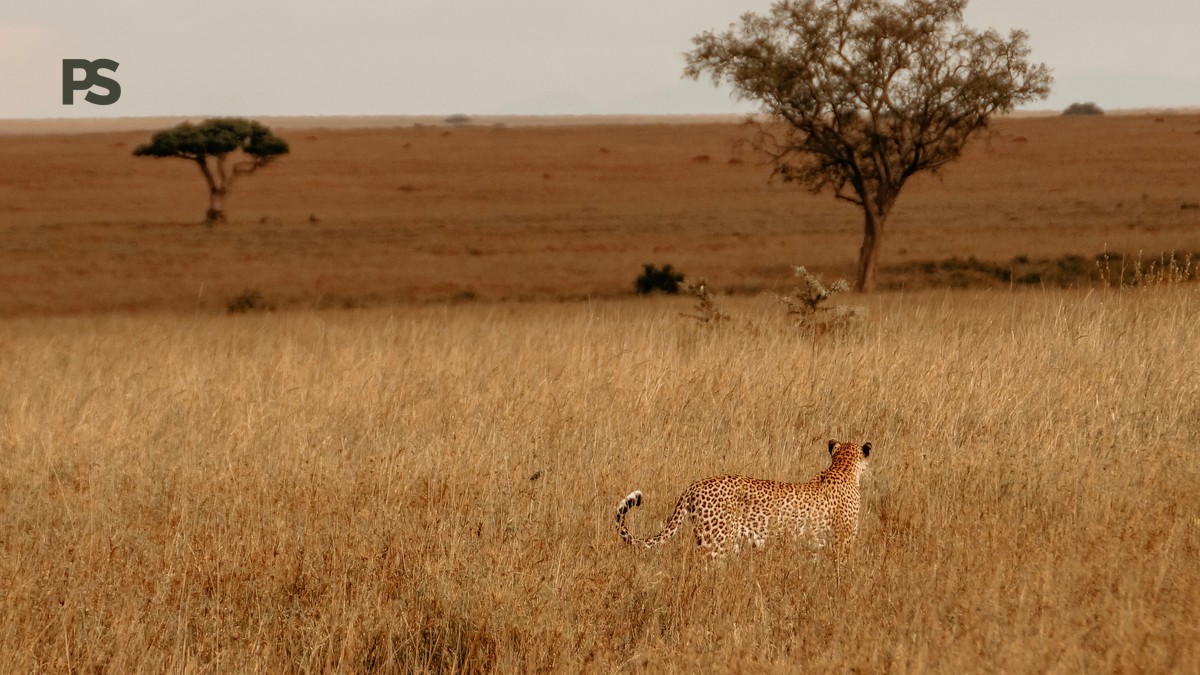
If you’ve already ticked off the Mara, September rewards a trip north to the Laikipia plateau, Samburu-Shaba ecosystem, or Meru National Park. These regions run far lower visitor numbers than the Mara year-round, and September’s dry, clear weather suits all three.
Laikipia sits around 200km north of Nairobi, roughly a four-hour drive or a 40-minute flight into Nanyuki. It’s a patchwork of private conservancies, including Ol Pejeta, which holds one of the last black rhino strongholds in East Africa alongside the two remaining northern white rhinos. Ol Pejeta’s non-resident entrance fee runs in the range of USD 90 to 100 per adult per day, an indicative figure since conservancy pricing shifts more often than KWS parks.
Samburu National Reserve and Shaba National Reserve sit about 325km and 330km north of Nairobi, a six-hour drive or roughly an hour by air. Samburu’s dry Ewaso Nyiro riverbed draws elephant, Grevy’s zebra, and reticulated giraffe, species you won’t see on a standard Mara circuit. Shaba, right next door, sees a fraction of Samburu’s already-modest traffic.
Meru National Park, about 285km from Nairobi and a five-hour drive, is where Elsa the lioness lived out George and Joy Adamson’s story. It’s lush, riverine, and rarely crowded, with lion and leopard sightings that don’t come with a line of vehicles.
Chyulu Hills National Park, closer to the coast route at around 230km from Nairobi, charges a KWS non-resident fee of USD 40 per adult per day, the lowest of any park in this piece. It pairs naturally with a stay near Amboseli, and for travelers building a wider itinerary, combining the Mara with Amboseli remains a solid option for linking two ecosystems in one trip.
Distances, fees, and drive times at a glance
| Destination | Distance from Nairobi | Drive time | Fly time | Non-resident park fee (Sept) |
|---|---|---|---|---|
| Masai Mara National Reserve | 270 km | 5-6 hrs | 45 min | USD 200/adult/day |
| Amboseli National Park | 240 km | 4-5 hrs | 45 min | USD 90/adult/day |
| Laikipia (Ol Pejeta area) | 200 km | 3.5-4 hrs | 40 min | USD 90-100/adult/day (indicative) |
| Samburu National Reserve | 325 km | 6 hrs | 1 hr | USD 70-90/adult/day (indicative) |
| Meru National Park | 285 km | 5 hrs | 1 hr | USD 70-90/adult/day (indicative) |
| Chyulu Hills National Park | 230 km | 4 hrs | 45 min | USD 40/adult/day |
What it actually costs to visit in September
This is the part worth planning around. A tented camp inside Mara North or Naboisho Conservancy typically runs USD 700 to 1,000 per person per night in September, close to August pricing, an indicative range since rates vary by camp and room type. Camps in Samburu, like Elephant Bedroom Camp or Saruni Samburu, and in Laikipia, like Sosian or Loisaba Tented Camp, tend to sit somewhat lower, often USD 450 to 750 per person per night in the same period, again indicative and worth confirming at booking.
The gap between Mara pricing and Laikipia or Samburu pricing is one reason repeat visitors shift north. You get a genuinely quieter experience, a different wildlife list, and a lighter bill, without giving up dry-season weather or good game viewing.
What to pack for September
Layers matter more than most packing lists suggest. Mornings start near 10°C in an open vehicle, and by midday you’re in short sleeves under a strong sun. Bring a fleece or light jacket, a wide-brim hat, sunscreen, and a neutral-colored outfit for walking safaris in Laikipia or Meru, where khaki and olive draw less attention from tsetse flies than dark colors. Binoculars are worth the suitcase space in Samburu’s open country, where sightings sit farther from the track than in the Mara’s thicker grass.
The Plain Safaris Difference
We don’t build every itinerary around the Mara Triangle in peak week. Our guides have driven the tracks into Naboisho at dawn, sat at the Purungat crossing point waiting for a herd to commit, and also spent quiet mornings watching Grevy’s zebra along the Ewaso Nyiro in Samburu with no other vehicle in sight. That contrast is exactly what we plan for repeat visitors.
We know which conservancies cap vehicle numbers at each sighting, which camps in Laikipia and Meru sell out first for September, and which weeks in the Mara still give the best odds on a river crossing. We build the route around what you’ve already seen, not a generic circuit.
Plan your September safari
If you’ve done the Mara before and want September’s dry weather with a quieter route through Samburu, Laikipia, or Meru, we can put together a circuit built around that. Get in touch through our contact page or browse our Kenya safari packages to start planning.