
Cheetah vs leopard spotting differences French speakers ask about most often come down to a few field marks you can check in seconds. The two cats can look similar at 80 metres through heat haze, but a few clear signs separate them fast. I have sat behind the wheel on these roads, watching both cats at first light. This guide is for you if you want to identify what you are seeing before your guide even says a word.
Cheetah vs Leopard Spotting Differences French Speakers Should Know First
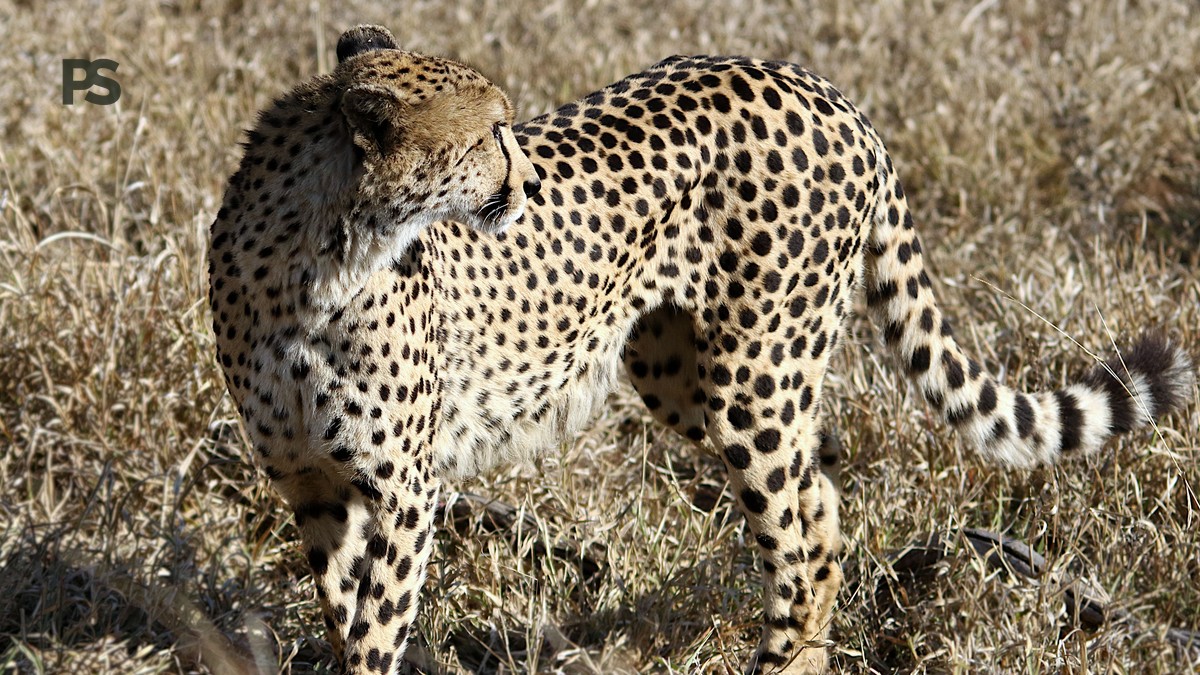
Look at the face and spots first. A cheetah has solid, separate black spots and two black tear lines running from the inner corners of its eyes to its mouth. A leopard has rosette-shaped markings, a broader head, and no distinctive tear lines. If the animal is slim and long-legged, it is probably a cheetah. If it is compact and muscular, it is probably a leopard.
In French, cheetah is guépard and leopard is léopard. Your guide in Kenya will likely say the English names, so learn both. When the vehicle stops and everyone raises binoculars, run the three-second rule: face first, then coat, then build. That order solves most sightings before confusion sets in. For more on how Kenyan guides describe what you are seeing, read our Kenya safari terminology explained.
Spots: Solid Dots Versus Rosettes
Cheetah markings are individual black dots or ovals spread across a tawny coat, like evenly spaced polka dots. Leopard markings form rosettes, irregular rings or clusters with a lighter centre on much of the body. Check the flank or shoulder rather than judging from a distant silhouette. Dust, shade, and motion can make both cats appear simply black-spotted.
At 60 metres through long grass, a leopard’s rosettes can look like merged spots. A cheetah’s dots stay separate even when the animal is moving. Ask for a clear side view, or wait for the cat to turn its shoulder toward you. If you can see rings with pale centres, you have a leopard. If the markings look like clean black dots on plain tan, you have a cheetah. This single check works on both live animals and photos you review later. Early morning backlight can wash out contrast, so use binoculars rather than a phone screen for the first confirmation.
Face Markings: The Cheetah’s Black Tear Lines
The cheetah’s black tear lines are the most reliable facial clue. They run from each inner eye down toward the mouth and contrast strongly with its relatively lightly marked face. Leopards do not have these lines. Their faces usually show more small spots and a broader, heavier-looking muzzle. Binoculars or a clear side view make this feature easiest to confirm.
French speakers often remember the word larme, meaning tear. When you see those black lines, say to yourself le guépard a des larmes, the cheetah has tears. A leopard may have dark patches near the eye, but they do not form a clean line down to the mouth. If the face looks more spotted than lined, hold your identification until you check the coat. On a walking safari or from a closed vehicle, this facial mark is often the first thing you can confirm with a good pair of 10×42 binoculars.
Body Shape, Size, and Movement
A cheetah looks tall, slim, and long-legged, with a small head and a deep chest built for short bursts of speed. A leopard looks lower, stockier, and more muscular, with a large head and powerful shoulders. In motion, a cheetah favours open ground and rapid acceleration. A leopard usually moves cautiously through cover or pauses to scan from concealment.
The difference is obvious when the two cats are seen in the same reserve, but that is rare. A cheetah on a termite mound in Naboisho Conservancy can stay still for half an hour, all legs and lean muscle. A leopard in a riverine fig tree near the Mara River looks thicker, with a head that seems too big for its body. The cheetah’s spine flexes when it runs, almost like a greyhound. The leopard walks with a rolling, powerful shoulder motion. If the animal looks like a sprinter, it is a cheetah. If it looks like a wrestler, it is a leopard.
Here is a quick side-by-side for the vehicle.
| Feature | Cheetah | Leopard |
|---|---|---|
| Coat pattern | Solid black dots, separate | Rosettes, rings with pale centres |
| Face | Black tear lines from eyes to mouth | No tear lines, spotted face |
| Build | Slim, long legs, small head, deep chest | Stocky, large head, powerful shoulders |
| Tail | Long, flat tail with rings near the tip | Long tail, often curled at the tip |
| Climbing | Rarely climbs trees | Strong climber, often rests in trees |
Where and When You Are Most Likely to See Each Cat on Safari
Cheetahs are most often associated with open grassland and daylight activity, where they can watch and chase prey. Leopards favour woodland, rocky cover, riverine vegetation, and low-light conditions, although they can appear at any time. Habitat and timing are clues, not proof. Always confirm with the coat pattern and face, because both species can share the same reserve.
On a Kenya route, this plays out in real places. Cheetahs are common in the open plains of the Masai Mara National Reserve, especially around the Talek and Sekenani sectors. The reserve is managed by Narok County, not KWS. A non-resident adult pays USD 100 per day from January to June and USD 200 per day from July to December. Leopards also live in the Mara, but you need more patience in the riverine forest and along luggas. Private conservancies that border the reserve, such as Mara North Conservancy and Naboisho Conservancy, often give better leopard sightings because vehicle numbers are capped and guides share sightings quietly. Conservancy fees are usually bundled into lodge rates at roughly USD 80 to 150 per person per night.
The table below gives a practical starting point for several Kenya parks and conservancies.
| Park or conservancy | Approx. distance from Nairobi | Typical drive or flight | Non-resident adult daily fee (USD) | Better for a first sighting |
|---|---|---|---|---|
| Masai Mara National Reserve | 240 km to Sekenani Gate | 5 to 6 hours by road, 45 min flight from Wilson | 100 low season, 200 peak July to December | Cheetah in open plains |
| Naboisho Conservancy | 250 km to Naboisho airstrip | 1 hour flight Wilson to Naboisho, or 5.5 hours road | 80 to 150 per person per night, bundled | Both, quiet vehicle pressure |
| Mara North Conservancy | 260 km to Mara North airstrip | 1 hour flight Wilson to Mara North | 80 to 150 per person per night, bundled | Leopard and cheetah, low vehicle density |
| Amboseli National Park | 240 km | 4 to 5 hours by road, 45 min flight | 90 | Cheetah in open basin |
| Lake Nakuru National Park | 160 km | 2.5 to 3 hours by road | 90 | Leopard in acacia and euphorbia woodland |
If you want to focus on leopards, see Kenya’s best parks for leopard sightings for a deeper look at where guides actually find them. The same parks often hold cheetahs, but the key is knowing which habitat to scan first.
Hunting Behaviour, Prey, and Tree Climbing
Cheetahs catch prey with speed and usually hunt in open areas, while leopards rely on stealth, ambush, and strength. Leopards are strong climbers and may drag kills into trees to protect them from scavengers. Cheetahs are not adapted to climbing and generally leave kills on the ground. These behaviours help identify an animal, but they are secondary to spots and facial markings.
On a game drive, behaviour can solve a distant sighting. A cheetah standing on a termite mound scanning gazelles is behaving like a cheetah. A leopard draped over a horizontal branch in a yellow-barked acacia is behaving like a leopard. Cheetahs hunt mostly in the cooler parts of the day, and they do not wait long before chasing. Leopards may watch prey for an hour without moving. If the animal slips down a tree and disappears into a lugga, think leopard first. If it accelerates across short grass and the vehicle cannot keep up, it is a cheetah.
A Practical Safari Identification Checklist for French Speakers
Ask four questions in order. Are the markings separate dots or rosettes? Does the face have black tear lines? Is the body slim or muscular? Is the animal moving through open ground or cover? In French, cheetah is guépard and leopard is léopard. Tell the guide what you see rather than guessing from colour alone, especially in backlight or dust.
Write this on a small card and keep it in your camera bag. Dots or rosettes? Tear lines yes or no? Slim sprinter or stocky wrestler? Open plain or thick cover? Your guide will confirm your answer. Many French-speaking guests also mix up the names at first, so saying je vois un guépard when you mean léopard is normal. The guide will correct you gently. The goal is not to be perfect. It is to read the field marks fast enough to enjoy the sighting. If you are combining the safari with a Nairobi stop, our French-speaking guide to visiting the Giraffe Centre in Nairobi helps you practise animal identification before you reach the big cats.
The Plain Safaris Difference
We plan routes around the light and the quiet times, not just around a list of animals. For a wildlife photographer, that means starting before first light, holding position on a sighting, and avoiding the crush of minibuses. We favour private conservancies in the Mara and low-density camps near Amboseli, where you wait for a cheetah to lift its head rather than fight for a window seat. Our guides know which lugga holds a leopard at 7 a.m. and which termite mound a cheetah uses as a lookout. We can also arrange a French-speaking guide or a translator, so you never miss the explanation of behaviour. You get the same detail we would want on our own cameras.
Frequently Asked Questions
What’s the difference between a cheetah and a leopard?
A cheetah has solid black spots, black tear lines on its face, and a slim, long-legged build. A leopard has rosette-shaped markings, no tear lines, and a shorter, heavier, more muscular body.
How can you tell a cheetah from a leopard?
Check the face first: black lines from the eyes to the mouth indicate a cheetah. Then inspect the coat, since separate dots indicate a cheetah while ring-shaped rosettes indicate a leopard. Body shape provides a useful final check.
Do cheetahs have spots or rosettes?
Cheetahs have solid black spots, usually round or oval and clearly separated from one another. Leopards have rosettes, which are clusters of spots forming irregular rings with lighter centres on much of the body.
Does a leopard have tear marks?
No, the distinctive black tear marks belong to the cheetah. Leopards may have facial spots and dark markings, but they do not normally show the strong lines running from the inner eyes to the mouth that identify a cheetah.
Which is faster, a cheetah or a leopard?
The cheetah is faster and is built for short, explosive sprints across open ground. The leopard is slower but stronger, relying on stealth, ambush, and climbing rather than a high-speed chase.
Plan Your Cheetah or Leopard Safari with Plain Safaris
You now know the field marks. The next step is choosing a route that gives you time to use them. Tell us whether you want open grassland for cheetahs, riverine cover for leopards, or a mix of both. We will shape the itinerary around your photography and the seasons. Start with our contact page to plan the trip.