
You have seen the footage. Hundreds of wildebeest storming the Mara River. Crocodiles waiting. Dust and chaos at golden hour. You want to photograph that, or simply watch it with your own eyes.
This is a great migration safari guide for Japanese speakers planning that trip. Most online guides are either too general or just a booking page for a group tour. This one gives you the real logistics, real prices, and the honest gaps you need to plan around.
I have driven these roads for years. I know which gates are quiet and which camps serve good rice. Let us get to work.
What Is the Great Migration?
The Great Migration is a constant, circular movement of about 1.5 million wildebeest, 200,000 zebra, and 400,000 gazelles. They follow rainfall and fresh grass across Tanzania and Kenya.
Many people think it is a single event. It is not. It is a year-round cycle. The herds are always moving somewhere. The question is whether you are in the right place at the right time.
For photographers, this means planning around light and position, not just animal numbers. A quiet river crossing at 7 AM is worth more than a crowded one at noon.
Where to See It: Masai Mara vs. Serengeti vs. Ndutu
The migration spans two countries. The Serengeti in Tanzania is huge. The Masai Mara in Kenya is its smaller northern extension. Ndutu is a region in the southern Serengeti.
| Location | Country | Typical Months | Key Feature | Park Fee (per adult/day) |
|---|---|---|---|---|
| Ndutu (Serengeti) | Tanzania | Dec-Mar | Calving season, many predators | USD 70-100 (indicative) |
| Central Serengeti | Tanzania | Apr-Jun | Herds spread, fewer crowds | USD 70-100 (indicative) |
| Northern Serengeti | Tanzania | Jul-Oct | Grumeti River crossings | USD 70-100 (indicative) |
| Masai Mara Reserve | Kenya | Jul-Oct | Mara River crossings | USD 100 (Jan-Jun), USD 200 (Jul-Dec) |
| Mara North Conservancy | Kenya | Jul-Oct | Private land, low vehicle density | USD 80-150 (bundled in lodge rates) |
The Mara is your best bet for the famous river crossings. It has the highest concentration of vehicles during peak season, but the private conservancies fix that.
Kenya or Tanzania: Which Should You Choose?
For Japanese travelers, I lean toward Kenya for three reasons.
First, flights are simpler. More carriers fly into Nairobi than into Kilimanjaro or Arusha. Second, the Mara is compact. You can cover a lot of ground in a few days. Third, the infrastructure for tented camps is excellent.
Tanzania is wilder and more remote. The calving season in Ndutu is spectacular for predators. But the distances are long. You lose photography time driving.
If you only have 7 days, choose Kenya. If you have 12 or more, you can combine both. That is a lot of travel, but the payoff is variety.
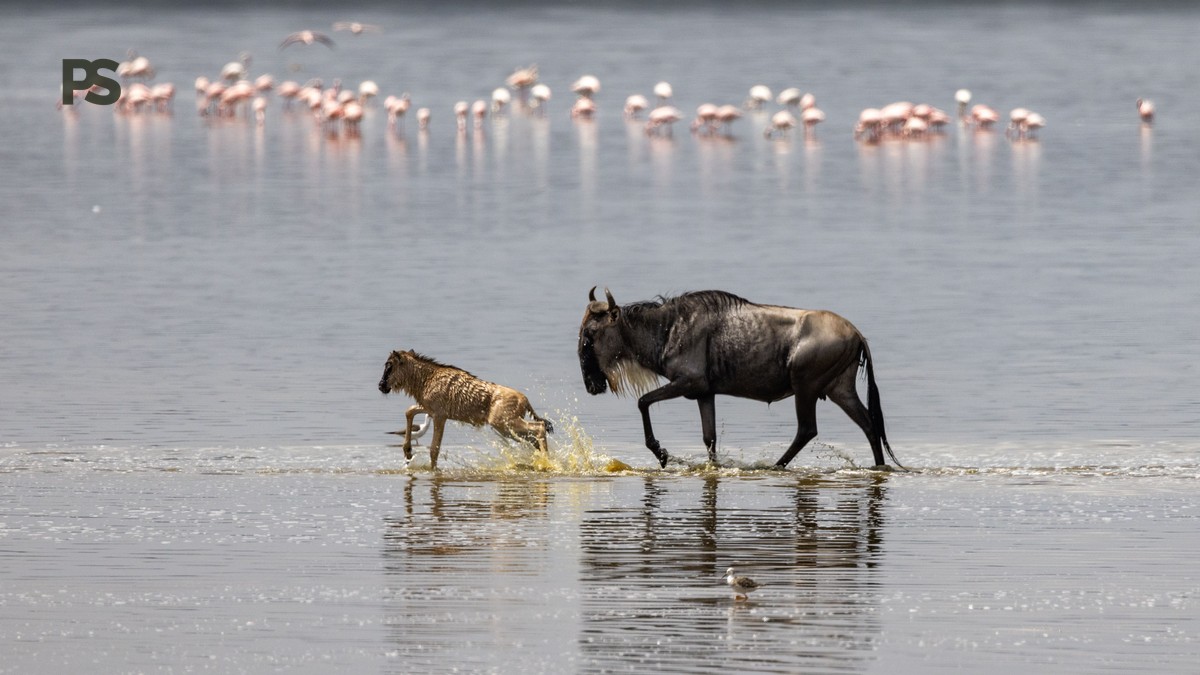
Best Time to Go: Month-by-Month Migration Calendar
Peak river crossing season is July through October. The exact timing shifts by weeks each year, depending on rain.
- January to March: Calving in Ndutu. Good for cheetah and lion action.
- April to May: Long rains. Camps close. Not recommended.
- June: Herds move north through the Serengeti. The Mara starts receiving animals.
- July: First crossings begin in the northern Serengeti and the Mara.
- August: Peak crossing activity in the Mara. Busy, but reliable.
- September: Crossings continue. Crowds remain high.
- October: Herds start moving south. Still good in the Mara.
- November to December: Short rains. The herds return to Ndutu.
For your best chance at a river crossing, book late July through September. Book at least 9 months in advance.
The Four Migration Phases
Understanding the phases helps you pick a camp.
Phase 1: Calving (Dec-Mar). Hundreds of thousands of births happen in Ndutu. Predators are everywhere. This is a photography goldmine.
Phase 2: The Push North (Apr-Jun). The herds mass and move west. They are scattered. Crossings are unpredictable.
Phase 3: River Crossings (Jul-Oct). This is the main event. Herds gather on the Mara River banks. They hesitate, then cross en masse. Crocodiles attack.
Phase 4: The Return (Nov-Dec). Rain pulls the herds south. The cycle repeats.
No one can guarantee a crossing on a specific day. The herds are wild. But during August and September, the probability is high.
Masai Mara: Public Reserve vs. Private Conservancy
This choice matters more than any other.
The Masai Mara National Reserve is public. Anyone can enter. During August, it gets crowded. At a big crossing, you may share the sighting with 20 other vehicles. Guides communicate by radio, so the spot is rarely secret.
The private conservancies like Naboisho and Mara North are adjacent to the reserve. They have strict rules. Only lodge vehicles are allowed. Vehicle density is capped. You rarely see more than 3 or 4 cars at a sighting.
This is the difference between photographing a crossing with an unobstructed view and photographing the backs of other tourists’ heads.
Conservancies cost more. The fee is bundled into your lodge rate at USD 80 to 150 per person per night. But for a serious photographer, it is worth every dollar.
I recommend spending at least half your Mara nights in a conservancy.
Park Fees and Real Prices
Park fees changed in October 2025. Use these current numbers.
- Masai Mara National Reserve: USD 100 per adult per day (January to June), USD 200 (July to December).
- Amboseli National Park: USD 90 per adult per day.
- Lake Nakuru National Park: USD 90 per adult per day.
- Tsavo East or West: USD 80 per adult per day.
- Nairobi National Park: USD 80 per adult per day.
Other parks like Samburu or Meru have different rates. Ask for an indicative range when booking. Do not rely on older blog posts.
Types of Safari: Private vs. Group vs. Combined
A private safari gives you a dedicated vehicle and guide. You set the schedule. You stay at a crossing for two hours if the light is good. This is best for photographers.
A group safari is cheaper. You share a vehicle with up to 6 strangers. The schedule is fixed. You cannot chase light. This is fine for casual travelers, frustrating for serious shooters.
A combined safari mixes the Mara with a beach. Many Japanese travelers add Zanzibar or Diani Beach. It works well if you have 10 or more days.
For a photography-focused trip, choose private. The cost difference is significant, but the images do not lie.
Finding a Great Migration Safari Guide for Japanese Speakers
Here is the honest truth: there are no in-house Japanese-speaking guides at the top safari camps. A few freelance guides exist, but they book out months ahead.
The standard solution is an interpreter. You hire a professional Japanese interpreter who travels with you in the safari vehicle. This costs USD 150 to 250 per day, booked in advance. That is on top of the guide’s fee.
This is not a bad deal. You get the expertise of a veteran wildlife guide plus flawless translation. For wildlife terms, the interpreter and guide will coordinate ahead of time.
If you need to book an interpreter, we arrange it during planning.
Flights from Japan (Narita/Haneda to Nairobi)
There are no direct flights from Tokyo to Nairobi. You will connect through the Gulf or East Africa.
Common routes and approximate total travel times from Narita:
- Qatar Airways via Doha: 17 to 20 hours total.
- Emirates via Dubai: 18 to 21 hours.
- Ethiopian Airlines via Addis Ababa: 16 to 19 hours. Often the fastest.
Kenya Airways does not fly directly from Tokyo. You will need one stop.
Book tickets 5 to 6 months ahead. Prices from Tokyo to Nairobi typically range USD 1,200 to 2,000 round trip.
Visas, eTA, and Health Requirements for Japanese Citizens
As of early 2026, Japanese citizens do not need a traditional visa for Kenya. You must apply for an Electronic Travel Authorization (eTA) online before departure. The fee is about USD 34. Processing takes up to 3 business days.
You also need a passport valid for at least 6 months. You need proof of yellow fever vaccination. This is not optional. Carry the certificate.
Malaria is present in the Mara. Talk to a travel clinic in Japan before your trip. They will recommend prophylactics.
Sample Itineraries by Trip Length
7 Days (Focus on the Mara):
- Day 1: Arrive Nairobi, overnight.
- Day 2: Fly to Masai Mara, settle into camp.
- Days 3-6: Game drives in the reserve and Mara North Conservancy.
- Day 7: Fly back to Nairobi, depart.
10 Days (Mara plus Lake Nakuru and Amboseli):
- Days 1-2: Nairobi and Lake Nakuru for flamingos and rhinos.
- Days 3-7: Masai Mara for crossings.
- Days 8-9: Amboseli for elephants and Kilimanjaro views.
- Day 10: Depart.
12 Days (Mara plus Zanzibar):
- Days 1-7: Safari in the Mara.
- Days 8-11: Fly to Zanzibar for beaches and Stone Town.
- Day 12: Fly home via Nairobi.
Drive times between camps matter. The Mara to Lake Nakuru is about 4 hours. Nakuru to Amboseli is 5 to 6 hours. Fly between parks if your schedule is tight.
Camera and Light Planning for River Crossings
As a photographer, your gear matters. Bring a long lens. A 400mm or 500mm is ideal for crossings. A 100-400mm zoom works well for flexibility.
Light is best in the first 2 hours after sunrise and the last 2 hours before sunset. Crossings happen all day, but the drama looks best at dawn.
Position your vehicle early. Ask your guide to arrive at a known crossing point 30 minutes before the herds start moving. This gives you the front spot.
Your camp’s location matters. Choose a camp that sits close to the crossing areas. Sala’s Camp in the Mara is positioned near the Sand River. Olare Mara Kempinski sits in a private conservancy with fast access to the river. Encounter Mara is another good option with strong light exposure in the mornings.
Food, Rice, and Dietary Notes
Safari camps cater to international guests. You will have access to rice at almost every meal. Many camps offer Indian-style rice dishes or plain steamed rice.
Japanese staples like miso soup, matcha, or dried squid are not common. Bring your own if you need them. A small stash of instant miso soup packs well and makes you feel at home.
Most camps will happily cook plain chicken or fish on request. Tell the camp chef about your preferences when you arrive. They are very accommodating.
The Plain Safaris Difference
Most operators treat Japanese guests as a checkbox. They add a translator and call it a day. We do not.
We build itineraries around how you want to shoot. We place you in conservancies with low vehicle caps. We book interpreters early so you get the best ones. We check that camps have rice before we confirm your booking.
We also give you honest advice. If the migration is late that year, we tell you. If the crowds are bad in the reserve, we push you to the conservancies. The goal is your images and your memory, not a checklist.
Plan the dates with time for light. Sit in the vehicle for an extra hour when the herd is hesitating. That patience is what gets the shot everyone else misses.
Frequently Asked Questions
What is the best month to see the Great Migration river crossings?
August and September offer the highest probability.
Can sightings be guaranteed?
No. The herds are wild. Crossings are not scheduled. But August and September are the best bets.
How long is the flight from Tokyo to Nairobi?
16 to 20 hours with one stop. Ethiopian Airlines via Addis is often fastest.
Do Japanese citizens need a visa?
No visa, but you need an eTA. Apply online before travel.
Is rice available at camps?
Yes, almost all camps serve rice daily.
Should I choose Kenya or Tanzania?
For a first trip focused on river crossings, choose Kenya. For calving season or more remote areas, choose Tanzania.
How far in advance should I book?
Peak season camps book out 9 to 12 months ahead. Book early.
Plan Your Trip with Plain Safaris
You have the logistics now. The next step is putting it together with someone who knows the ground. We specialize in photography-focused safaris that respect your time, your budget, and your language needs.
Tell us your dates and your camera bag. We will handle the rest.
Start planning your Great Migration safari with Plain Safaris.